

Disclosure: This post contains affiliate links. If you purchase through one of our links, we may earn a small commission at no extra cost to you. We only recommend products we’d genuinely suggest to a friend.
Fitting three car seats across isn’t just a buying decision — it’s a puzzle. And most parents don’t realize until install day that not all “slim” seats actually fit together.
Updated for 2026 · 7 min read
If you’ve been searching for how to fit three car seats across the back row, you’ve probably landed on a list of “slim” seats and assumed the problem is solved. It isn’t. The real issue is that fitting three seats is a combination problem, not a single-seat problem — and the layout matters just as much as the seats you choose.
Here’s the one thing most parents get wrong: they buy three identical narrow seats. That often fails because seats flare at different heights, cup holders collide, and seat belt paths overlap. You need a puzzle fit, not a matching set.
Start with the SlimFit3 LX if…
- You need all three seats to fit across one row
- Your kids are mixed ages and sizes
- You want one seat to anchor the whole setup
Add a Contender Slim if…
- Budget is a concern for a secondary seat
- You need a narrow option for the outer position
- You’re building a budget-conscious combo
➡ Best anchor seat for most setups: Graco SlimFit3 LX
The best seats for 3-across
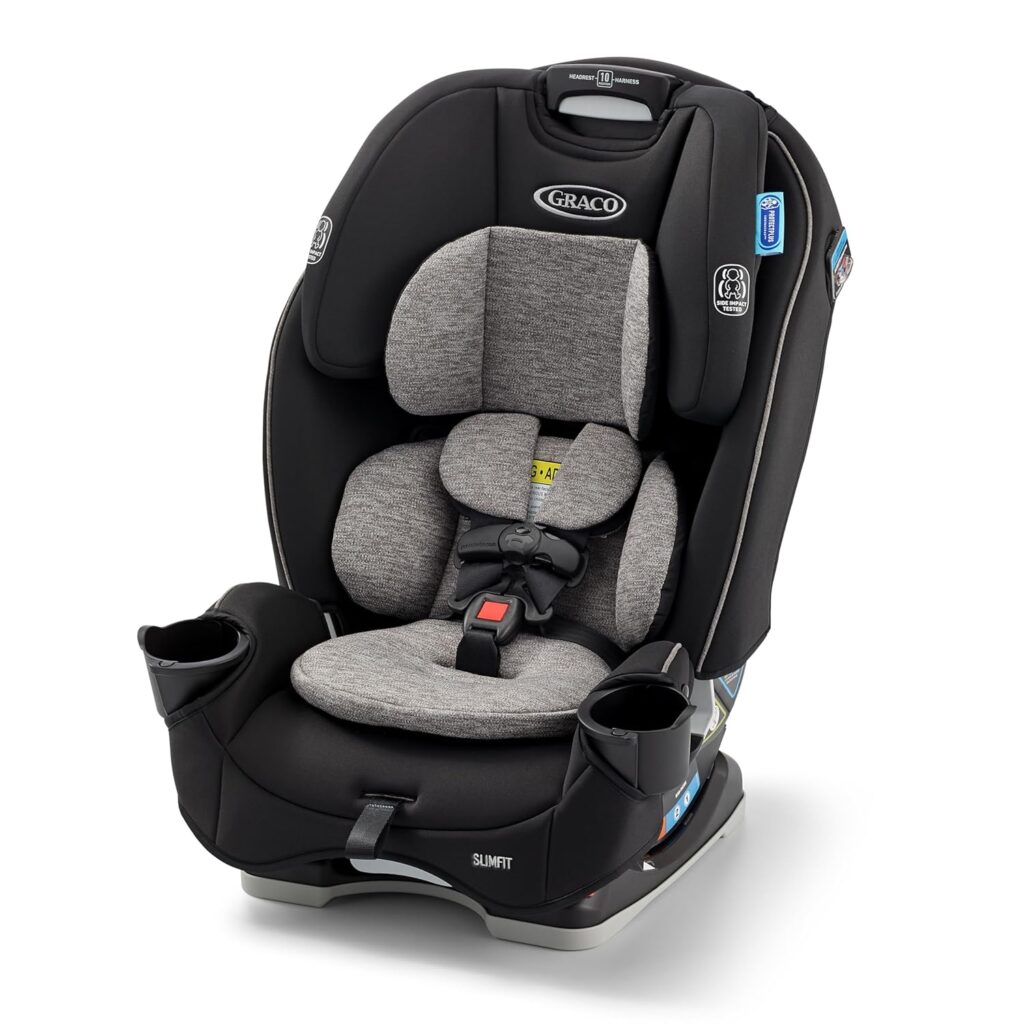
Best Overall · Narrowest Pick
Graco SlimFit3 LX 3-in-1
~16.7″ wide · Designed for 3-across setups
- No bulky external cup holders to collide with neighbors
- Converts rear-facing → forward-facing → booster
- Works in all three back-row positions
- Best starting point for any 3-across layout
This is the seat to build your layout around. Its combination of low profile and rotating cup holders makes it the one seat that plays well with almost everything else.
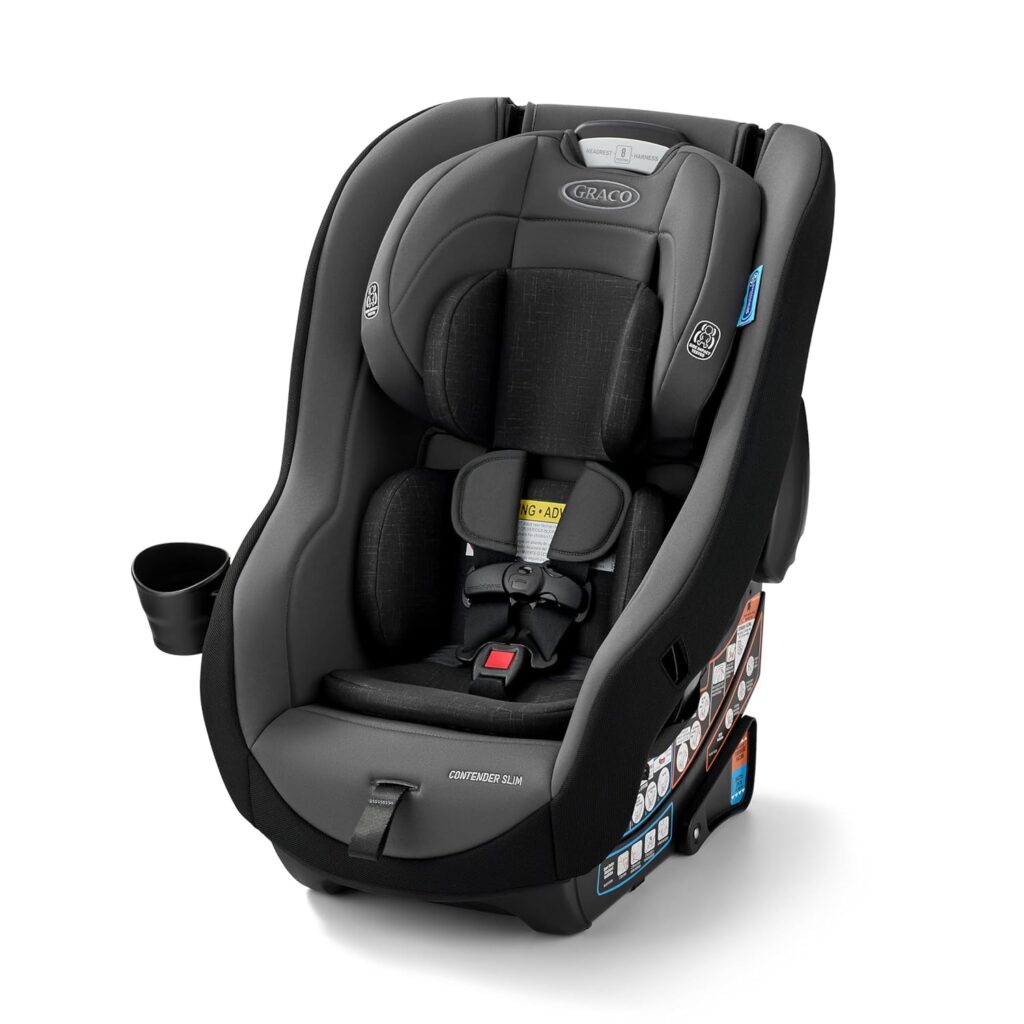
Budget Pick · Most Affordable
Graco Contender Slim Convertible
~16.5–17″ wide · Best for cost-conscious setups
- One of the narrowest seats at this price point
- Good for outer positions next to a wider seat
- Ideal for secondary cars or backup installs
- Straightforward install with no fuss
Not as versatile as the SlimFit3 LX over time, but if budget is the constraint, this is where to save money without sacrificing the narrow profile you need.
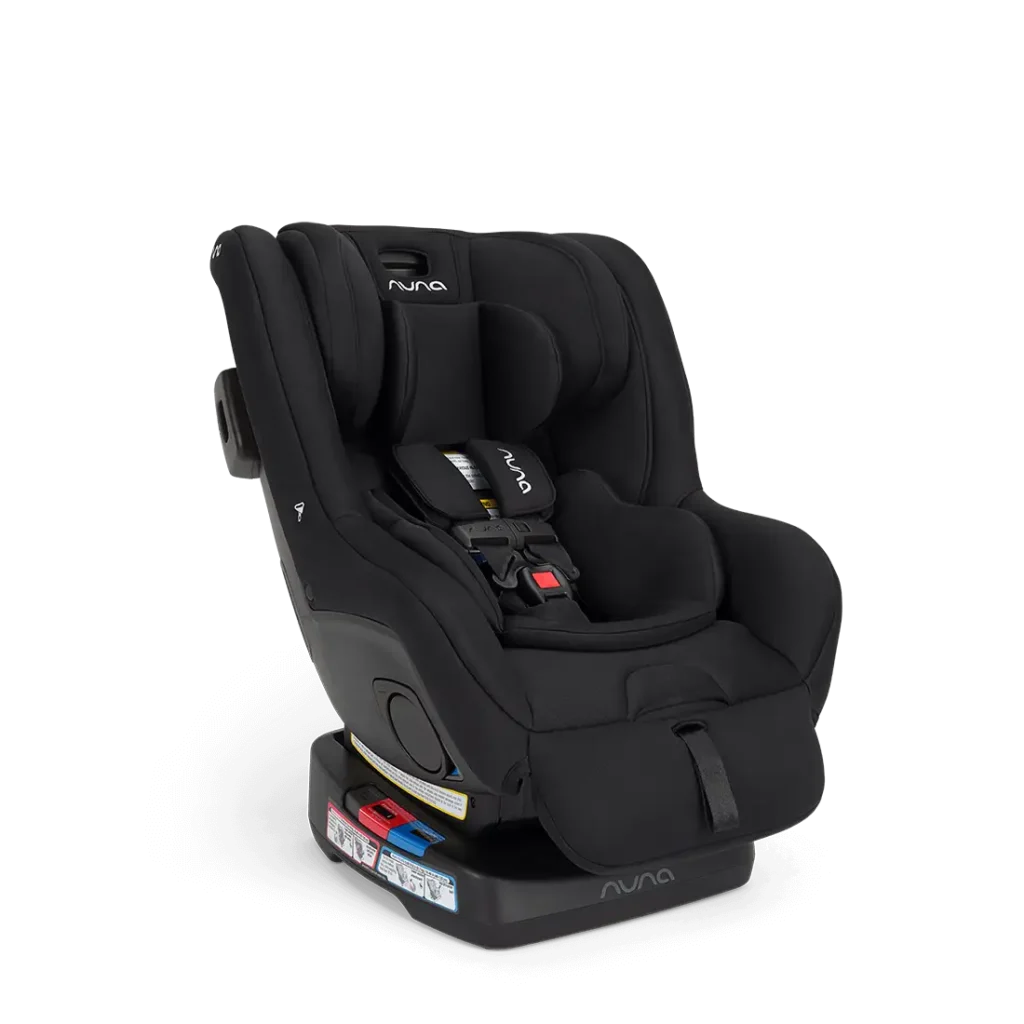
Premium Pick · Easiest Install
Nuna RAVA Next Convertible
Premium materials · Forgiving install
- Easiest install of the three — less margin for error
- Premium padding and build quality
- Relatively narrow despite the higher price tier
- Best option if you’ve struggled with installs before
Worth the premium if install frustration has been your experience. A seat that goes in right the first time is worth a lot when you’re fitting three across.
Side-by-side comparison
| Feature | SlimFit3 LX | Contender Slim | Nuna RAVA Next |
|---|---|---|---|
| Width | ~16.7″ | ~16.5–17″ | Narrow-ish |
| 3-across design | ✅ Built for it | ✅ Works well | Possible |
| Cup holders | Rotate inward | Standard | Minimal profile |
| Converts to booster | ✅ Yes | No | No |
| Install ease | Good | Good | Best |
| Price tier | Mid-range | Budget | Premium |
The secret: how to actually fit 3 across
Seat width is only half the equation. The other half is how you arrange them. Here are the four things that actually determine whether three seats will fit in your specific car.
1. Mix seat types — this is huge
Different shapes create a better puzzle fit. Best combos: infant seat + 2 convertibles, booster + 2 narrow convertibles, or rear-facing in the middle flanked by two forward-facing seats. Identical seats fight each other for space.
2. Use the middle seat strategically
The center position is often the narrowest. A rear-facing convertible or a slim booster almost always works better in the middle than the sides. Don’t default to symmetry — the middle seat is its own puzzle piece.
3. Seat belt install beats LATCH (most of the time)
LATCH anchors are typically spaced too wide for three-seat setups. Seat belt installs let you shift each seat slightly inward, gaining critical inches. This change alone can make or break a 3-across setup.
4. Stagger the heights
One high-back seat, one lower-profile seat, one rear-facing — seats at different heights prevent overlap at the shoulder and head level. This is why a booster + convertible + infant seat combo often works when three convertibles won’t.
What to expect based on your car
Common problems — and what to try
Try switching the install order, switching from LATCH to seat belt, and moving the rear-facing seat to the center position. The order you install them in matters.
Put the booster on the side with the most space, and use a narrower convertible next to it. A booster beside another booster is almost always too wide.
Move the rear-facing seat to the center position. This almost always improves driver legroom without sacrificing the install.
That’s normal — not a failure. Even with the best seats, 2–3 attempts is standard for first-time 3-across setups. You may need to exchange one seat. That’s part of the process.
Proven setup examples
Scenario: 3 kids under 4
2× SlimFit3 LX on the outside · 1× rear-facing convertible in the middle · Seat belt installs only
Scenario: Infant + toddler + older child
Infant seat on one side · Narrow convertible (Contender Slim) in the middle · Booster on the other side
Scenario: Compact sedan survival
3× ultra-narrow seats (SlimFit3 LX style) · Seat belt installs only · Rear-facing seat in center · Measure before buying
Final Verdict
Start with the SlimFit3 LX, then build around it
For most families, the Graco SlimFit3 LX is the right anchor seat — its rotating cup holders, narrow profile, and booster conversion make it the most flexible piece of a 3-across puzzle. Pair it with a slim convertible in the middle and a booster on the other side, and you have a setup that works in most vehicles.
Before you buy: a 60-second check
- Measure your back seat total width from door panel to door panel.
- Note the width between the seat belt buckles — that’s your tightest constraint.
If your total back seat width is under ~50 inches, you’ll need ultra-narrow seats across the board (SlimFit3 LX style) and seat belt installs only. Under 47 inches is very challenging — measure twice before spending anything.
If you’re working with a compact car, also read our Graco SlimFit vs Extend2Fit guide — the SlimFit3 LX is the 3-across pick, but the Extend2Fit solves a different problem entirely.