

Affiliate disclosure: This site earns a commission from Amazon when you purchase through our links, at no extra cost to you.
Carrying a baby is one of the most natural things a parent does — until your lower back starts to disagree. An ill-fitting carrier shifts your baby’s weight onto your shoulders and spine instead of distributing it properly, and after a few hours of that, you’re done for the day. The right carrier changes everything. A wide padded waistband, ergonomic shoulder straps, and proper weight distribution mean you can carry your baby for hours without paying for it the next morning.
We researched the top-rated options on Amazon to find baby carriers that genuinely protect your back, not just ones that claim to. Whether you have an existing back condition, are recovering postpartum, or simply want to babywear without building up chronic pain, there’s a carrier on this list for you.
- Best overall: Ergobaby Omni Deluxe Baby Carrier
- Best budget pick: Infantino Flip 4-in-1 Carrier
- Best for toddlers: Beco Toddler Carrier
- Best for postpartum back pain: Momcozy Baby Carrier
- Best for hiking: Chicco SmartSupport Backpack Carrier
- Best splurge: WildBird Aerial Buckle Carrier
Comparison Table
| Product | Weight Range | Carry Positions | Waist Support | Price Range |
|---|---|---|---|---|
| Ergobaby Omni Deluxe Baby Carrier | 7–45 lbs | 4 | Wide padded belt | ~$200 |
| Infantino Flip 4-in-1 Carrier | 8–32 lbs | 4 | Wide waist belt | ~$40 |
| Beco Toddler Carrier | 20–60 lbs | 2 | Lumbar support | ~$130 |
| Momcozy Baby Carrier | 7–44 lbs | 3 | EVA lumbar belt | ~$60 |
| Chicco SmartSupport Backpack Carrier | 16–48.5 lbs | 1 (back carry) | Padded hip belt | ~$180 |
| WildBird Aerial Buckle Carrier | 12–45 lbs | 2 | Cross-back straps | ~$160 |
The 6 Best Baby Carriers for Back Support
1. Ergobaby Omni Deluxe All-in-One Baby Carrier — Best Overall
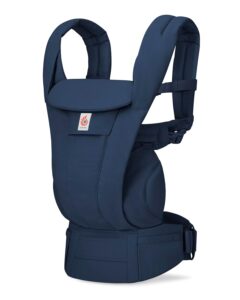
Who it’s for: Parents who want the most thoroughly tested, back-friendly carrier on the market and are willing to pay for it.
Specs:
- Weight range: 7–45 lbs (newborn to 48 months)
- Carry positions: 4
- Weight: 1.6 lbs
Bottom line: The Ergobaby Omni Deluxe is the most rigorously parent-tested carrier for back support available. If back comfort is your primary concern and budget allows, start here.
What We Like
- Wide structured waistband and thickly padded shoulder straps distribute your baby’s weight across your hips and core rather than your shoulders and lower back — the key mechanic that prevents strain during long wear
- Supports four carry positions: front inward, front outward, hip, and back carry
- Visual markings on waist straps make it easy to switch between two caregivers of different sizes without re-adjusting everything from scratch
- Parent testers with postpartum sciatica and existing back conditions reported no strain or soreness during or after use
- Available in breathable mesh for warm weather
What to Know
- At ~$200 it’s a significant investment
- Taller or broader parents may need a few tries to dial in the fit — once adjusted, most find it extremely comfortable
2. Infantino Flip 4-in-1 Carrier — Best Budget Pick
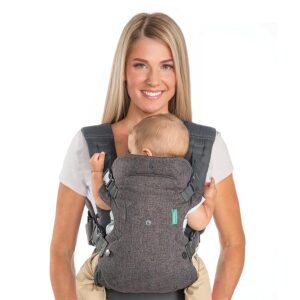
Who it’s for: Parents who want proper back support features without spending over $50.
Specs:
- Weight range: 8–32 lbs
- Carry positions: 4
- Price: ~$40
Bottom line: For under $40 you get the two features that matter most for back support — a wide waist belt and padded straps. The best entry point for parents not ready to commit to a premium carrier.
What We Like
- Wide padded waist belt evenly distributes weight across your hips — the single most important feature for back support, present here at a budget price point
- Padded shoulder straps reduce pressure on the upper back and neck
- Four carry positions including back carry, giving you flexibility as your baby grows
- Adjustable seat width accommodates different caregiver body types, including both parents using the same carrier
What to Know
- Less padding than premium carriers — comfortable for shorter sessions, may feel the weight on longer outings
- Best for babies 8–32 lbs, so you’ll outgrow it sooner than the Ergobaby
3. Beco Toddler Carrier — Best for Toddlers
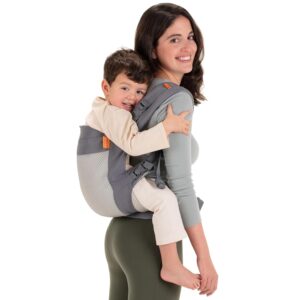
Who it’s for: Parents of older, heavier babies and toddlers who need a carrier built for higher weight loads without destroying their lumbar region.
Specs:
- Weight range: 20–60 lbs
- Carry positions: 2
- Material: 100% cotton with 3D mesh
Bottom line: If your baby has outgrown other carriers and your back is suffering for it, the Beco Toddler is purpose-built for exactly this problem. The 60 lb weight limit means it will last well into toddlerhood.
What We Like
- Built specifically for toddlers 20–60 lbs — most carriers tap out at 32–45 lbs, making this one of the few genuine options for parents of bigger kids
- Dedicated lumbar support panel designed for extended carry of heavier children
- Extra-wide seat keeps toddler in the M-position (knees higher than bottom) for healthy hip development
- 3D performance mesh keeps both parent and toddler cool during longer outings
- Certified hip-healthy by the International Hip Dysplasia Institute
What to Know
- Only two carry positions (front and back) — no outward-facing option
- Higher price point around $130
4. Momcozy Baby Carrier — Best for Postpartum Back Pain
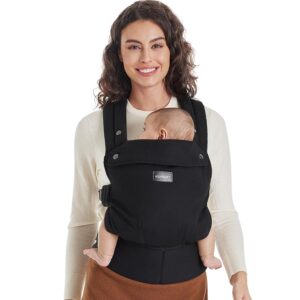
Who it’s for: New parents dealing with postpartum back pain or sensitivity who need maximum lumbar support from day one.
Specs:
- Weight range: 7–44 lbs
- Carry positions: 3
- Key feature: EVA lumbar support belt
Bottom line: The EVA waist belt makes this the most targeted option for parents with genuine lower back issues. Strong choice for the fourth trimester and beyond.
What We Like
- Built-in EVA waist belt provides structured lumbar support — EVA is a firmer foam that holds its shape under load rather than compressing flat like standard padding
- Ergonomic M-position seat promotes healthy hip and spinal development for baby
- Three adjustable sizing positions grow with your baby from 7–44 lbs
- Thickly padded shoulder and waist straps designed for extended wear
- Lightweight overall design — easier on the body when you’re already recovering
What to Know
- Three carry positions rather than four — no back carry option
- Less brand recognition than Ergobaby, though Amazon ratings are strong
5. Chicco SmartSupport Backpack Carrier — Best for Hiking
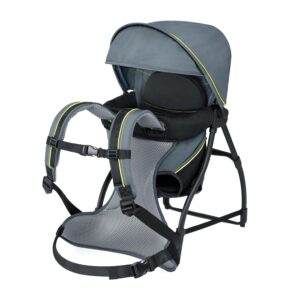
Who it’s for: Active families who want to hike or walk long distances with a toddler and need a frame carrier’s superior weight distribution.
Specs:
- Weight range: 16–48.5 lbs
- Frame: Lightweight aluminum
- Carry positions: Back carry
Bottom line: If you hike or walk long trails with your toddler, a framed carrier like the Chicco SmartSupport is the single best thing you can do for your back. The aluminum frame does the work your spine shouldn’t have to.
What We Like
- Lightweight aluminum frame transfers your toddler’s weight directly to your hips rather than your shoulders — the most effective back-protection design for heavier children
- Padded ergonomic shoulder straps and hip belt adjust for a truly custom fit
- Height-adjustable seat with padded backrest and 5-point harness keeps toddler secure on uneven terrain
- Breathable 3D mesh reduces heat buildup during long carry sessions
- Doubles as a functional backpack with storage
What to Know
- Designed for back carry only — not suitable for everyday around-the-house babywearing
- Bulkier than soft-structured carriers — better for outdoor use than airport navigation
6. WildBird Aerial Buckle Carrier — Best Splurge
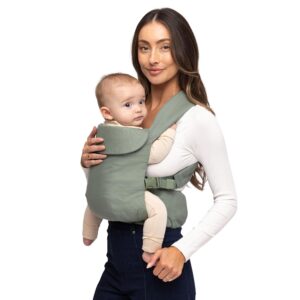
Who it’s for: Parents who want premium natural materials, a refined fit system, and cross-back strap design for superior weight distribution.
Specs:
- Weight range: 12–45 lbs (2–24 months)
- Carry positions: Front and back
- Certification: Öko-Tex, hip-healthy certified
Bottom line: The cross-back strap design is genuinely different from standard carriers and makes a real difference for parents who feel strain across the upper back specifically. Worth the price for daily wearers.
What We Like
- Cross-back strap design distributes weight across both shoulders and down through the waist simultaneously — one of the most back-friendly configurations available in a soft-structured carrier
- Infinite adjustability via the strap system allows a genuinely custom fit for almost any body type
- Natural materials, Öko-Tex certified for chemical safety
- Ergonomic panel keeps baby in M-position for healthy hip development
- Strong independent testing results — rated “good” by Stiftung Warentest for safety and usability
What to Know
- At ~$160 it’s a premium price
- The Velcro adjustment mechanism can make noise in quiet settings — a minor but noted issue for parents who carrier-nap their babies
What to Look for in a Baby Carrier for Back Support
Waist belt width and structure This is the most important feature for back support, full stop. A wide, structured waist belt transfers your baby’s weight onto your hips and core — the strongest part of your body — rather than letting it pull down on your shoulders and lumbar spine. Look for a belt that sits on your hip bones, not your waist. If the belt is thin or flimsy, the carrier will hurt your back regardless of how padded the shoulder straps are.
Shoulder strap design Wide, padded straps distribute weight across your entire shoulder and upper back rather than concentrating it on a narrow band. Cross-back strap configurations — where straps cross between your shoulder blades — offer even better distribution by engaging both sides of your back evenly.
Baby positioning The M-position (baby’s knees higher than their bottom, thighs supported from knee to knee) keeps your baby’s weight centered close to your body. When a baby hangs low or their weight sits out in front of you, it dramatically increases the load on your lower back. Any carrier worth buying should hold baby in this position automatically.
Carrier type vs. back support Soft structured carriers (SSCs) with waist belts offer the best back support for everyday use. Ring slings and wraps can be back-friendly with proper technique but have a steeper learning curve. Frame backpack carriers offer the best support for heavy toddlers on long hikes but aren’t practical for daily use.
Your baby’s current weight A carrier rated for newborns will feel fine at 10 lbs and strain your back at 25 lbs. Match the carrier to where your baby is now and where they’ll be in six months.
Frequently Asked Questions
What type of baby carrier is best for back pain? Soft structured carriers with a wide, structured waist belt are best for most parents with back pain. The waist belt shifts your baby’s weight to your hips rather than your spine. For heavier toddlers on long walks, a framed backpack carrier offers even better weight distribution.
Can wearing a baby cause back problems? A poorly fitted carrier can contribute to back pain. The fix is fit, not babywearing itself. Ensure the waist belt sits on your hip bones, your baby is held close enough to kiss, and the carrier is tight enough that your baby doesn’t sag. Most back pain from babywearing comes from a carrier that’s too loose.
What is the M-position and why does it matter? The M-position means your baby’s knees are higher than their bottom and their thighs are supported from knee to knee, forming an M shape when viewed from the front. This keeps baby’s weight centered against your body, reducing the forward pull that strains your lower back. It’s also the healthiest position for your baby’s hip development.
How long can you wear a baby carrier? With a well-fitted ergonomic carrier, many parents wear for two to four hours at a stretch without discomfort. Start with shorter sessions and build up. If you feel strain in your lower back or shoulders, check your fit before assuming the carrier isn’t working.
Are baby carriers safe for newborns? Yes, with proper positioning. Follow the TICKS rule: Tight, In view at all times, Close enough to kiss, Keeping chin off chest, and Supported back. Most carriers on this list are rated from 7–8 lbs and include newborn inserts or adjustable positions for smaller babies.
For most parents, the Ergobaby Omni Deluxe is the safest investment — it’s the most thoroughly tested carrier for back comfort, works from newborn through toddler, and accommodates two caregivers of different sizes. If budget is tight, the Infantino Flip 4-in-1 gives you the essential back-support features for under $40. And if you’re carrying a heavier toddler and your lower back is already protesting, go straight to the Beco Toddler — it’s built specifically for that problem.