
This post contains affiliate links. If you buy through them, we may earn a small commission at no extra cost to you.
When you’re searching for the best family tents, the problem is usually the same one: capacity ratings that don’t match real life. Whether you’re planning a weekend at the local campground or a week on the road, a “4-person” tent gets cramped fast once you add kids, air mattresses, and a rainy afternoon. This guide to the best tents for family camping focuses on 6-person tents with room for real gear. (Not sure what size you need? Start with our guide to what size tent for a family of 4.)
Quick answer: Of the best family tents we compared, the North Face Wawona 6 is the best overall — tall, roomy, and built for families who spend real time at camp. For the best balance of space and price, the Kelty Wireless 6 is the better buy. If your kids nap or sleep light, the Kelty Daydreamer 6 keeps the tent dark, and if you want the fastest setup, the Coleman Instant Cabin goes up in about a minute.
Jump to:
North Face Wawona 6
Tall, roomy, and a huge front vestibule for chairs and gear.
Kelty Wireless 6
Big floor and 74 in of headroom at a much lower price.
Kelty Daydreamer 6
Darkening rainfly helps little ones sleep in bright campgrounds.
Coleman Instant Cabin
Pre-attached poles — up in about a minute.
How We Evaluated
We didn’t pitch these tents ourselves for this guide. Instead, to find the best family tents, we compared independent hands-on testing (including CleverHiker’s 2026 camping tent tests), manufacturer specs, and owner reviews, and we focused on what matters for a family of four: usable floor space, headroom, setup, weather protection, and how each tent handles a long, rainy afternoon with everyone inside. Every one of the best family tents here is a 6-person model, following the same rule as our sizing guide: for four people, size up.
Which of the Best Family Tents Is Right for Your Setup?
The best family tents differ a lot in weight, setup, and weather protection, so match your situation to the feature that solves it, then jump to that review.
Best Family Tents Compared
Here are the best family tents side by side, so you can compare floor size, headroom, and weight before you click through.
| Tent | Best For | Floor (L × W) | Peak Height | Weight | Price |
|---|---|---|---|---|---|
| North Face Wawona 6 | Best overall, long stays | 116 × 94 in | 76 in | 19 lb 7 oz | Check Price |
| Kelty Wireless 6 | Best value | 118 × 106 in | 74 in | 18 lb 15 oz | Check Price |
| Kelty Daydreamer 6 | Napping kids | 120 × 107 in | 77 in | 19 lb 12 oz | Check Price |
| Mountainsmith Conifer 5+ | Most space and gear room | 120 × 120 in | 74 in | 14 lb 11 oz | Check Price |
| Coleman Instant Cabin | Fastest setup | 10 × 9 ft | About 6 ft | About 24 lb | Check Price |
The North Face Wawona 6
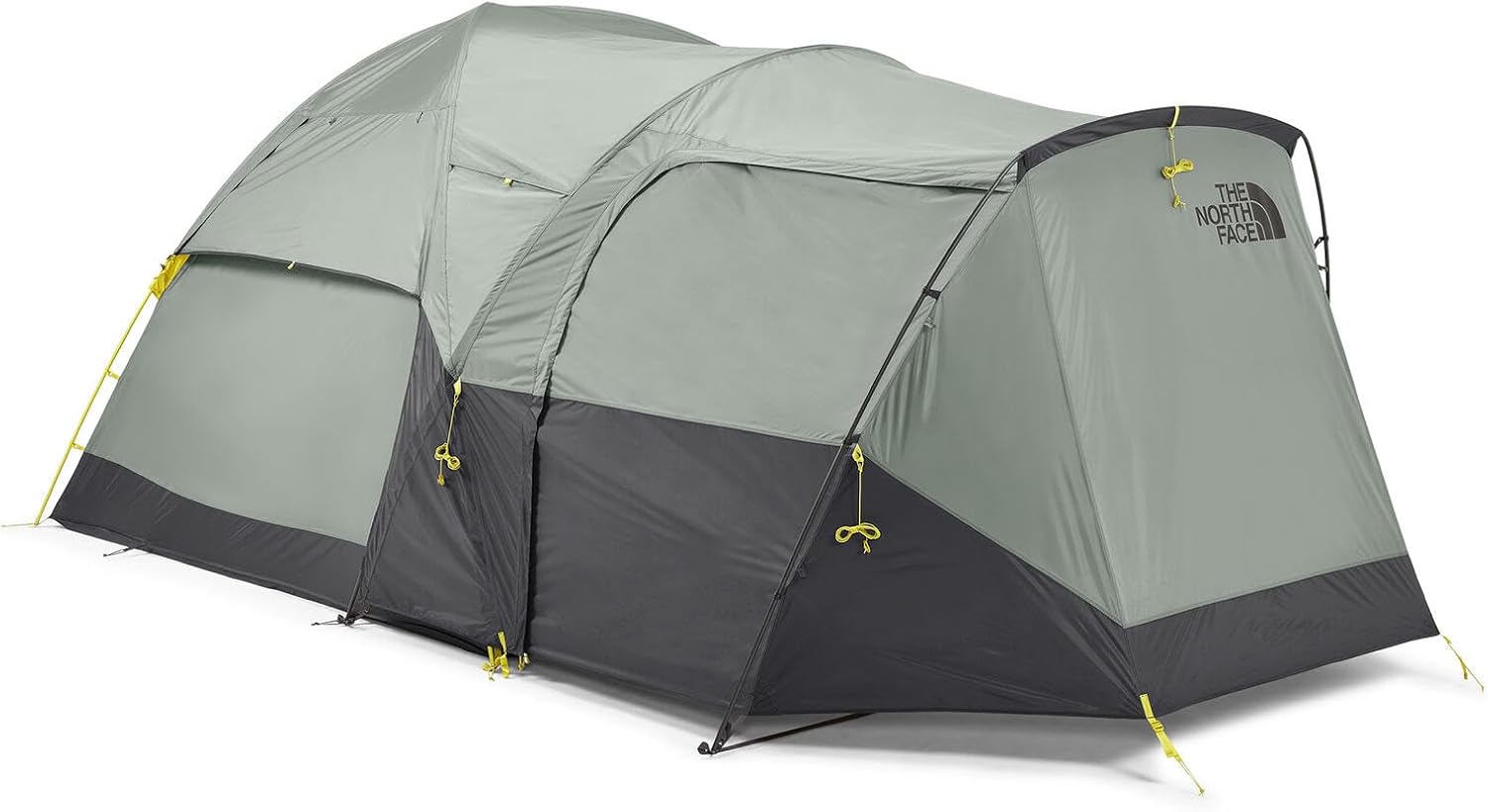
Among the best family tents, the Wawona 6 is the one to buy if you want your family to actually enjoy being inside it. The 76-inch peak and near-vertical walls mean most adults can stand up and move around, and the giant front vestibule (about 45 sq ft) gives you covered space for chairs, bins, and muddy boots — a real difference when it rains and everyone would otherwise be squeezed into the sleeping area.
Independent testers found it comfortable for a family of four to five, and it held up in 40–50 mph winds when fully staked and guyed out. The trade-offs are the price, the weight (about 19½ lb), and a pitch that goes faster with two people. This is a base-camp tent for families who camp several nights at one site, not a grab-and-go option.
✓ Pros
- Tall 76-inch peak — most adults can stand
- Huge front vestibule for chairs and gear
- Sturdy aluminum poles and durable fabric
- Plenty of interior pockets and effective vents
✗ Cons
- Priciest tent in this guide and one of the heaviest
- Slower to pitch, and tricky in wind without a helper
- Footprint sold separately
- Must be fully staked and guyed out in gusty weather
Kelty Wireless 6
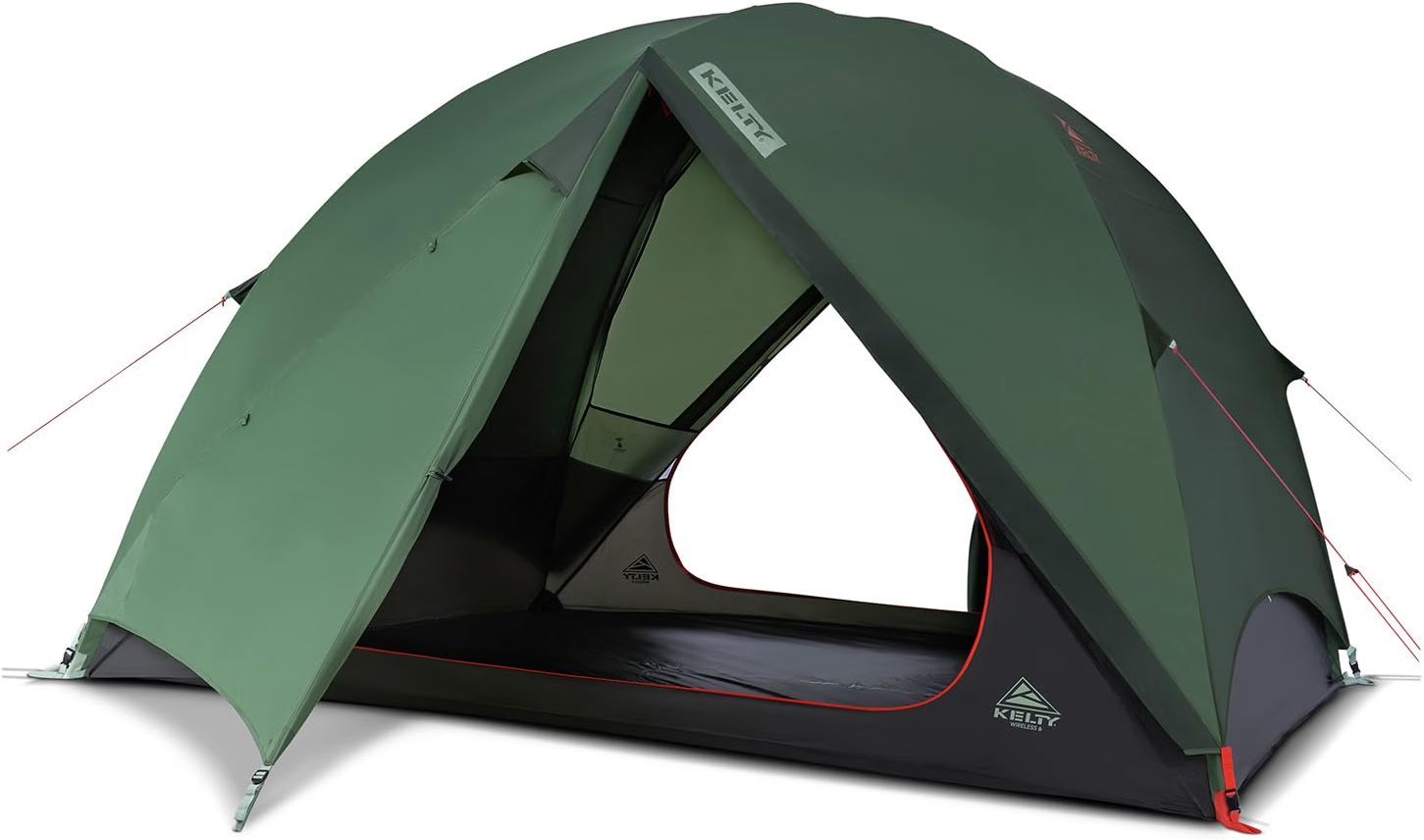
This is the tent we’d point most families to, and it’s one of the best family tents for the money. You get a big floor (118 × 106 in), 74 inches of headroom, and an easy pitch for far less than the Wawona. Color-coded poles and deep pole pockets make setup manageable even at dusk with tired kids, and the latest version adds pre-attached guylines, aluminum stakes for the guy-out points, and more mesh for airflow.
Testers rated it comfortable for four and tight for five, which lines up with our 6-person rule for a family of four. It’s a car-camping tent (nearly 19 lb), it can feel warm on still, hot days, and one tester noticed some floor seepage after several days of steady rain — so pitch it on good ground and consider a footprint if the forecast is wet.
✓ Pros
- Roomy 118 × 106 in floor with 74 in of headroom
- Fast, intuitive pitch with color-coded poles
- Pre-attached guylines and stakes for the guy-out points
- Great value for the amount of space
✗ Cons
- Can run warm without a breeze
- Some floor seepage reported after days of steady rain
- Footprint sold separately
- Only a few small interior pockets
Kelty Daydreamer 6
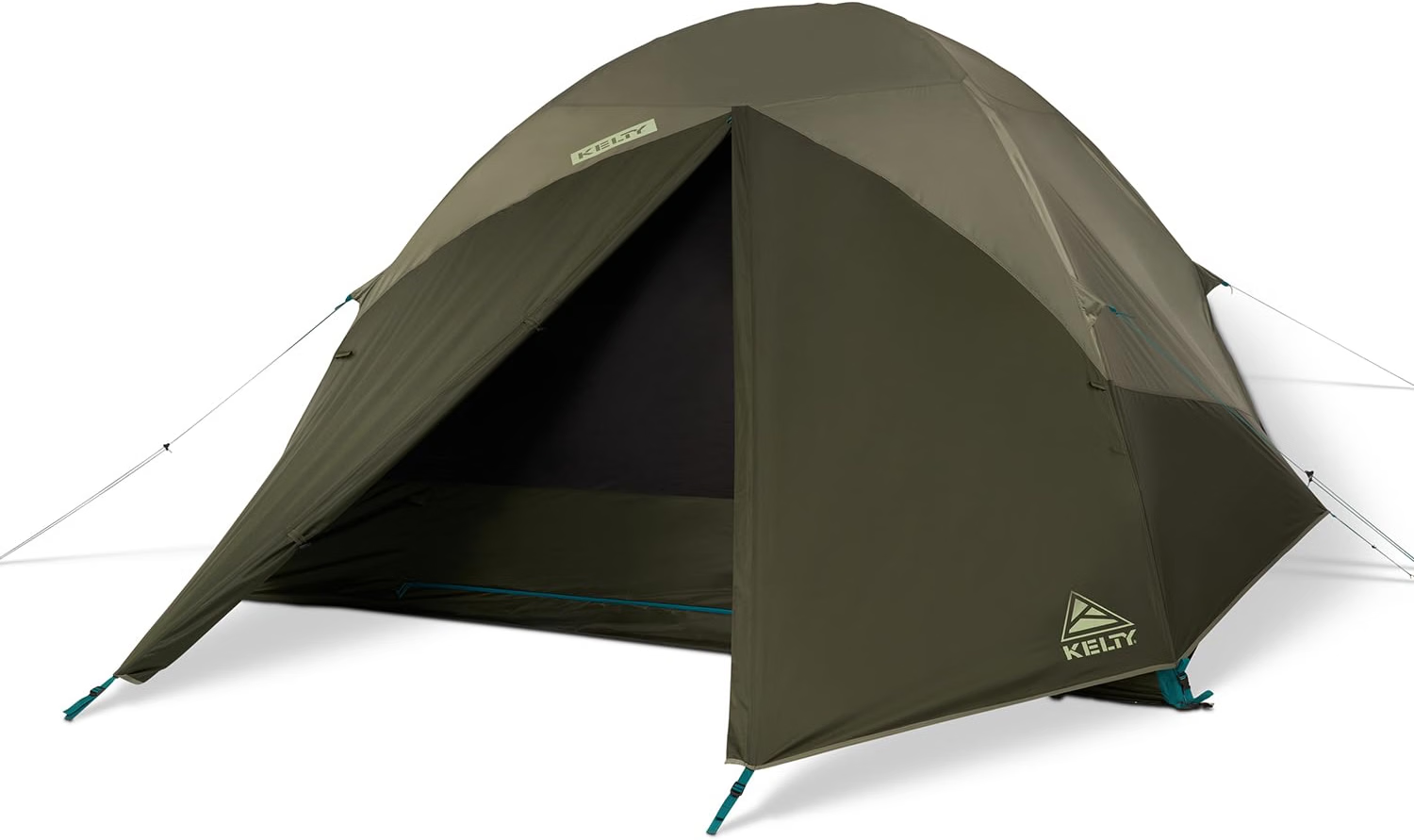
If your kids nap midday or go to bed while it’s still light out, this is one of the best family tents for you, thanks to the Twilight Tech rainfly: it noticeably darkens the interior, which makes it much easier to get little ones to sleep in a bright campground. It also has a tall 77-inch peak, a roomy 120 × 107 in floor, and a mostly-mesh body that’s great for hot nights and stargazing.
It’s a fair-weather tent. With the fly on, ventilation drops, and the fiberglass poles and thinner floor aren’t as tough as what you’ll get on pricier picks. Testers called it comfortable for three to four people and tight for six — think of it as a sleep-friendly campground tent, not a storm shelter.
✓ Pros
- Fly blocks sunlight for naps and early bedtimes
- Tall 77-inch peak and a roomy floor
- Easy setup with color-coded clips
- Mostly-mesh body for warm nights
✗ Cons
- Poor ventilation with the fly on
- Thin floor and fiberglass poles
- Low-quality stakes — plan to upgrade
- Best for fair weather, not storms
Mountainsmith Conifer 5+
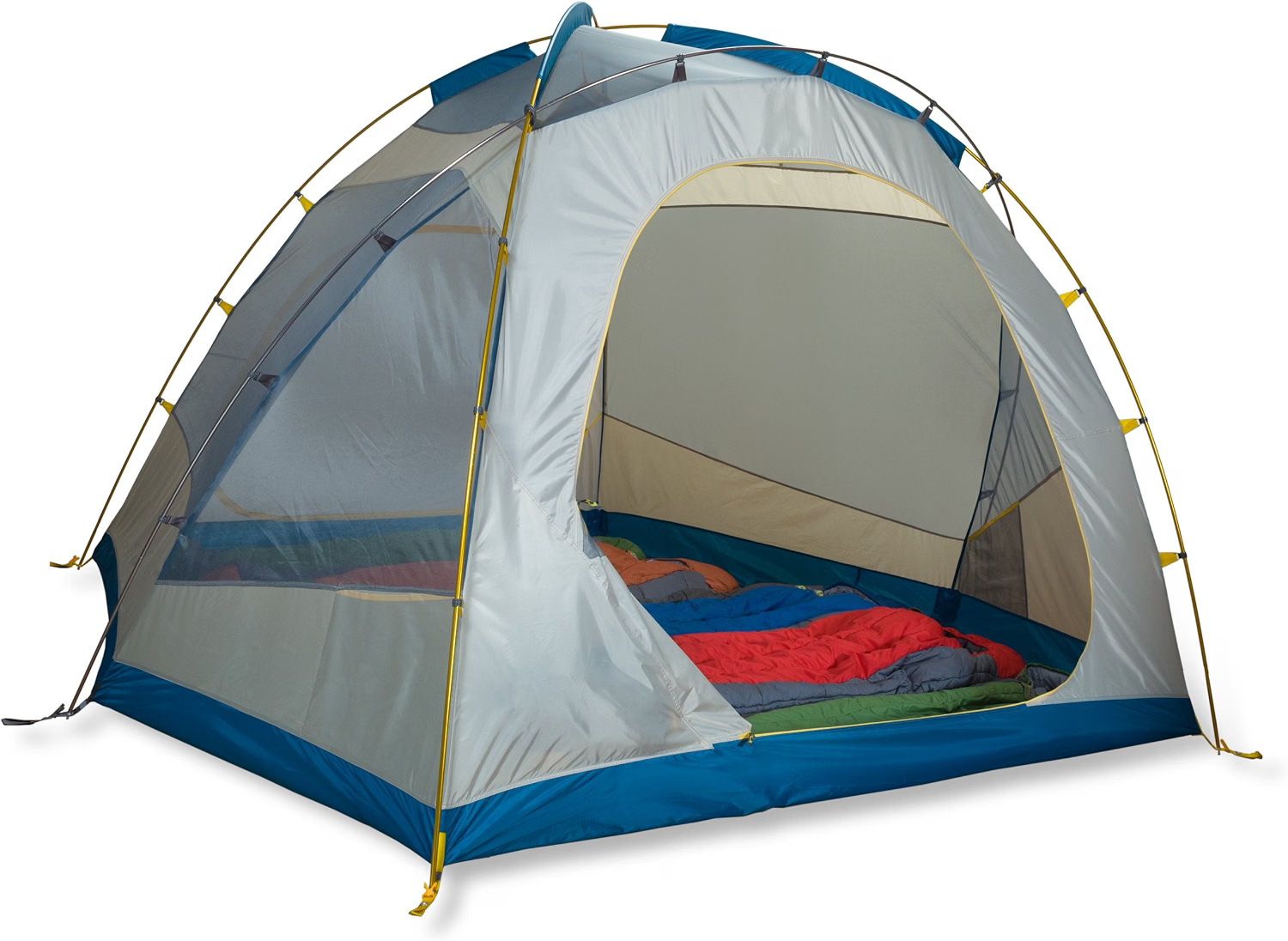
The Conifer 5+ is all about square footage. At 120 × 120 inches it has the biggest floor here, with standing-height headroom, a huge front vestibule, and a second vestibule in the back for gear. It’s also the lightest of the big tents in this guide at about 14¾ lb, which helps if you’re hauling your own bins.
The catch is setup and site size. Testers found it harder to pitch than most, it needs a big flat spot, and it really wants to be fully staked and guyed out. Comfortable for three to four (tight for five), it’s a good fit for families with a lot of gear or a dog who don’t mind a longer setup.
✓ Pros
- Huge 120 × 120 in floor
- Front and rear vestibules for gear
- Good headroom, interior storage, and ventilation
- Lightest of the large tents in this guide
✗ Cons
- More effort to pitch than most
- Needs a large, level campsite pad
- Performs best fully staked and guyed out
- No window on the rear door
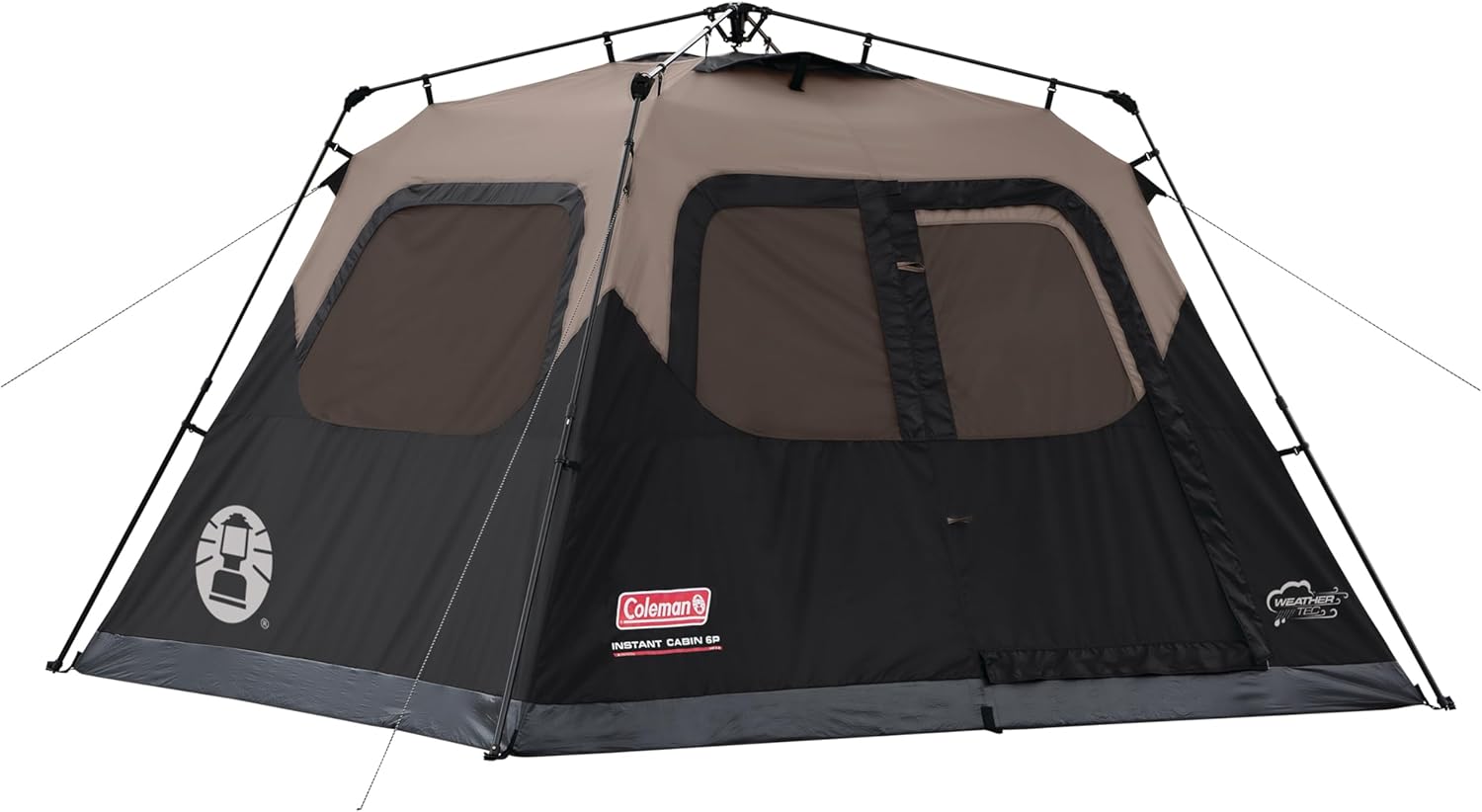
Coleman Instant Cabin
If setup is your biggest camping stress, this is the answer. The poles come pre-attached: unfold it, extend it, lock it in place, and Coleman says you’re done in about a minute. The floor is roughly 10 × 9 ft (about 90 sq ft) with around 6 feet of center height, and the cabin-style walls make the space feel bigger than a dome of the same size.
It’s built for convenience, not for storms. It’s heavy (about 24 lb), there’s no vestibule, and some buyers report leaks at the floor seam in rain — so it’s best for fair-weather weekends, late arrivals, and first-time campers. If rain is in the forecast, bring a tarp. It’s comfortable for four; six is a squeeze. Make sure you select the 6-person size on the Amazon page.
✓ Pros
- Pitches in about a minute
- Cabin-style walls with about 6 ft of center height
- Integrated vented rainfly — no extra assembly
- Freestanding, so it’s easy to move around the site
✗ Cons
- Heavy at about 24 lb
- No vestibule
- Some buyers report leaks in rain
- Best for fair weather, not storms
How to Choose the Best Family Tents
When choosing the best family tents, floor space and peak height matter most, but a few other decisions do a lot of the work too.
Size up. For a family of four, get a 6-person tent. For five or six people, go to an 8-person. A queen air mattress is about 80 × 60 inches, so measure your bedding before you buy.
Check your campsite pad. Many campgrounds limit tent pads to roughly 10 × 10 to 12 × 12 feet. A giant tent that doesn’t fit the site you reserved is a bad way to start a Friday night.
Look at peak height and wall shape. Near-vertical walls give you more usable space. Taller tents catch more wind, so stake and guy them out properly.
Match the rainfly to your weather. Full-coverage flies and taped seams handle storms better. Partial flies vent well but protect less in long rain.
Consider a footprint. It protects the floor from rocks and roots. Get the right size — one that sticks out past the tent can pool water underneath.
Plan how you’ll haul it. A 20-pound tent plus bins, chairs, and a cooler adds up fast. If you need help getting gear from the car to the site in one trip, see our 3 best wagons under $100.
Camping with a baby or toddler? Shade and sun protection matter as much as the tent itself. Our guide to baby sun protection gear covers sun tents, hats, and more.
The Bottom Line
The best family tents give you real floor space, enough headroom to move around, and a setup you can handle after a long drive. For most families that means the Kelty Wireless 6 for the money, or the North Face Wawona 6 if you camp often, with the Daydreamer 6 or the Instant Cabin when naps or setup speed matter most. Whichever of the best family tents you choose, size up and check your campsite’s tent-pad limits before you book.
FAQ
What size tent do I need for a family of 4?
A 6-person tent with roughly 90–100 sq ft of floor space. A 4-person rating assumes everyone sleeps shoulder to shoulder with no gear, so it feels cramped fast with kids and air mattresses. Our family of 4 tent size guide breaks it down in more detail.
What are the best family tents overall?
Of the best family tents in this guide, the North Face Wawona 6 is the most comfortable and livable, thanks to its tall interior and huge front vestibule. If you want the best balance of space and price, the Kelty Wireless 6 is the better buy.
Are instant tents good for families?
They’re great for speed and simplicity, especially when you arrive late or have tired kids. The trade-off is that they usually give up some weather protection and durability, so they suit fair-weather weekend trips best.
Do I need a footprint for my family tent?
It isn’t required, but a properly sized footprint protects the tent floor from rocks and roots and can extend the life of the tent. Make sure it isn’t larger than the tent floor, or it can collect water underneath.