
Baby Sleep · Nursery Air
The heat is on, the room feels dry, and someone has told you a humidifier for baby’s room is a must-have. Here’s how to find out in two minutes, and what to buy if the answer is yes.
This post contains affiliate links. If you buy through them, I may earn a commission at no extra cost to you. As an Amazon Associate I earn from qualifying purchases.
Your baby’s skin looks a little flaky, the furnace has been running for a week, and a friend swears a humidifier changed her life. It might help. It might also grow mold in your nursery if you buy the wrong one or forget to clean it. Both are true, which is why this decision deserves two minutes of homework before you spend any money.
This guide covers whether you need a humidifier for baby’s room at all, what humidity level to aim for, why cool mist is the standard choice, the best baby humidifier picks for a nursery (all easy to clean), and the cleaning routine that keeps one safe. It’s general information, not medical advice, so if your pediatrician says something different for your baby, go with theirs.
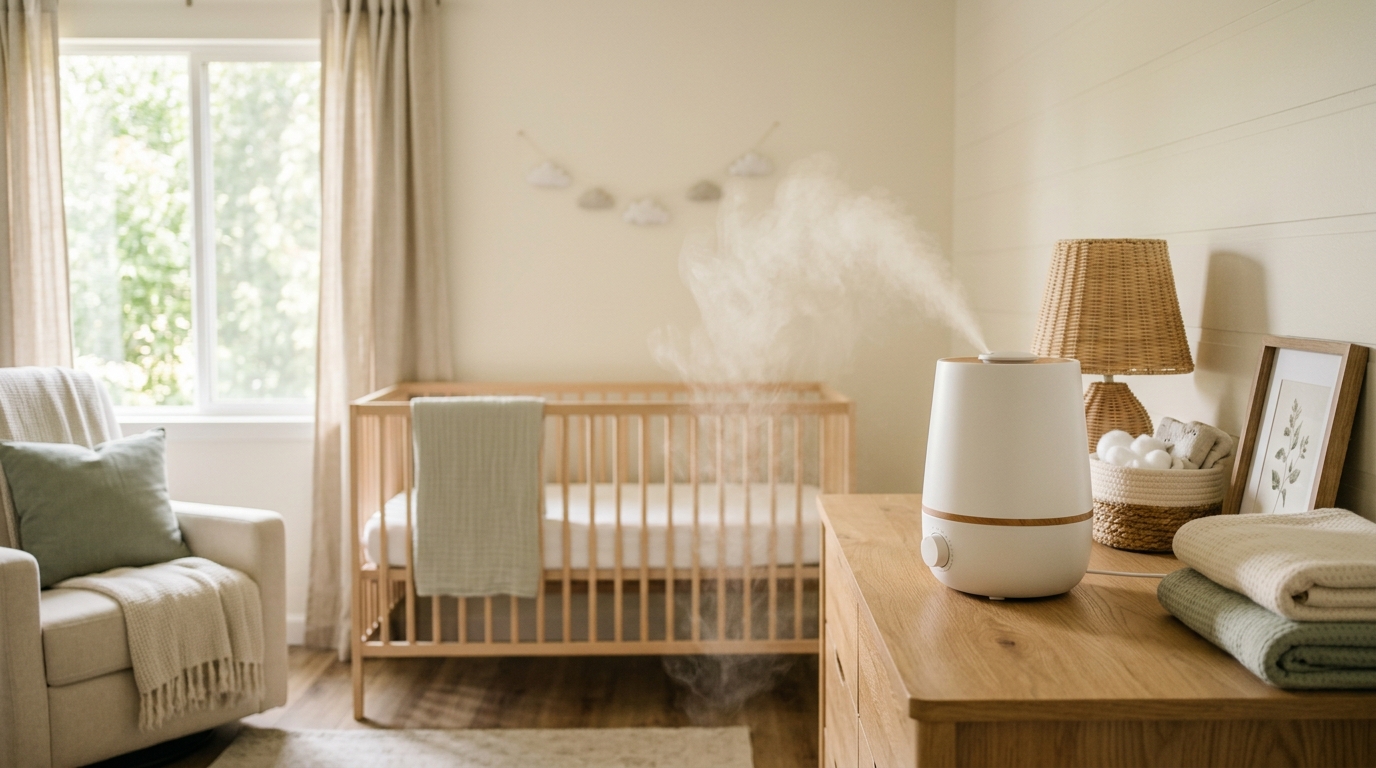
Jump to Do you need one? · Humidity level · Cool vs. warm mist · Our picks · Safe use · Cleaning · Humidifier + purifier · FAQ
Before you buy a humidifier for baby’s room, check the air with a hygrometer first. If humidity is low, roughly under 30 to 40%, a cool-mist humidifier can help with dry air. If it’s already around 40 to 50%, skip it. If you buy one, get cool mist with a tank that’s easy to take apart and clean, and clean it on a schedule. Ready to shop? Jump to our easy-clean picks.
| What it does | Our pick | Why we like it |
|---|---|---|
| Check humidity first | TempPro TP50 Thermometer/Hygrometer | Shows room temperature and humidity at a glance |
| Best overall | Canopy Nursery Humidifier 2.0 | Forbes Vetted’s top pick, with a dishwasher-safe tank |
| Easiest to clean | Honeywell HCM-350 Cool Moisture | Named easiest to clean in Forbes Vetted’s tests |
| Best value | Crane Adorables Ultrasonic Cool Mist | Forbes Vetted’s best value pick |
| Very large spaces | Levoit Superior 6000S | Forbes Vetted’s best large-room pick, with app control |
Do You Need a Humidifier for Baby’s Room?
Often, no. Consumer Reports puts it plainly: a humidifier is typically not necessary for your baby’s health. Plenty of babies sleep fine in heated rooms without one, and a humidifier you don’t maintain can cause more trouble than dry air does.
It starts to make sense when your home is genuinely dry, which happens most in winter with the heat running, or in desert climates. Signs worth noticing:
- Dry, flaky skin that gets better after a few days in a more humid place
- A dry, stuffy nose that crusts overnight
- Static shocks, cracked lips, or a room that feels dry to you too
But feelings aren’t data. A hygrometer tells you in a minute whether the room is actually dry, and it keeps you from overdoing it later.
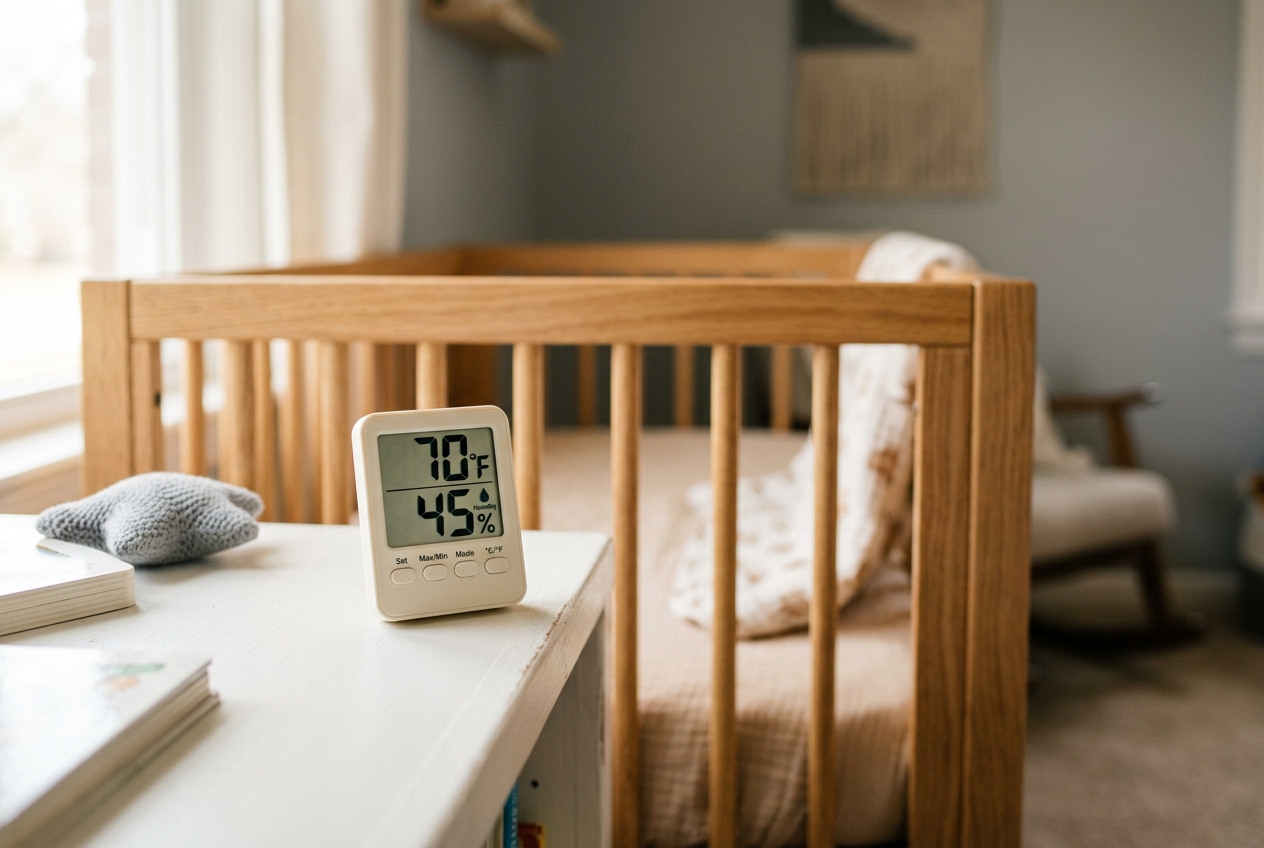
Measure before you buy
A small hygrometer reads temperature and humidity together, and it’s the same device that helps you keep the nursery at a comfortable sleep temperature. Put it at crib height, away from vents, and watch it for a day.
Check price on Amazon →What Humidity Should a Baby’s Room Be?
Sources vary a little. Most land between about 30% and 50%, and some allow up to 60%. We aim for the middle, around 40 to 50%, because both extremes cause problems.
| Reading | What it means | What to do |
|---|---|---|
| Under 30% | Very dry air | A cool-mist humidifier can help |
| 30–40% | On the dry side | Optional. Try it if skin or nose are bothering your baby |
| 40–50% | The sweet spot | No humidifier needed |
| Over 50–60% | Too humid | Turn it off. Damp air feeds dust mites and mold |
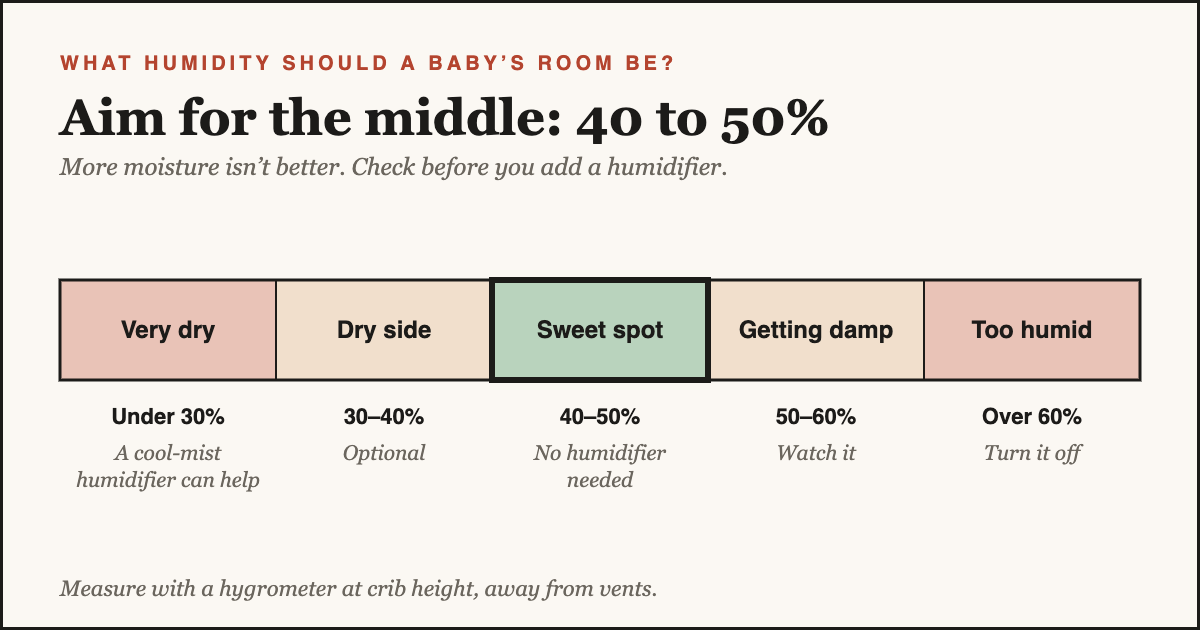
More moisture isn’t better. The goal is the middle of the range, not the highest number.
Temperature matters here too. Consumer Reports notes the ideal sleep temperature for babies is between 68 and 72°F, and the same hygrometer covers both numbers.
Cool Mist vs. Warm Mist: Which Is Safer for a Nursery?
Cool mist. Warm-mist humidifiers (steam vaporizers) heat water and can cause burns, and KidsHealth specifically recommends cool mist over warm. Consumer Reports adds that the American Academy of Pediatrics recommends cool mist for babies and children. Within cool mist, there are two main styles:
| Type | How it works | Trade-off |
|---|---|---|
| Ultrasonic | Vibrations turn water into a fine mist | Quiet, but tap water can leave white mineral dust, so distilled water helps |
| Evaporative | A fan blows air through a wet wick filter | Self-regulating, but the filter needs replacing |
Both work. What separates a good nursery humidifier from a frustrating one is mostly how easy it is to clean, because a unit you dread cleaning is one you’ll skip cleaning.
Best Humidifier for Baby’s Room: Easy-Clean Cool Mist Picks
These humidifier for baby’s room picks come from Forbes Vetted’s tested baby humidifier roundup. We looked for cool mist, a tank you can reach into, and a good record on cleaning.
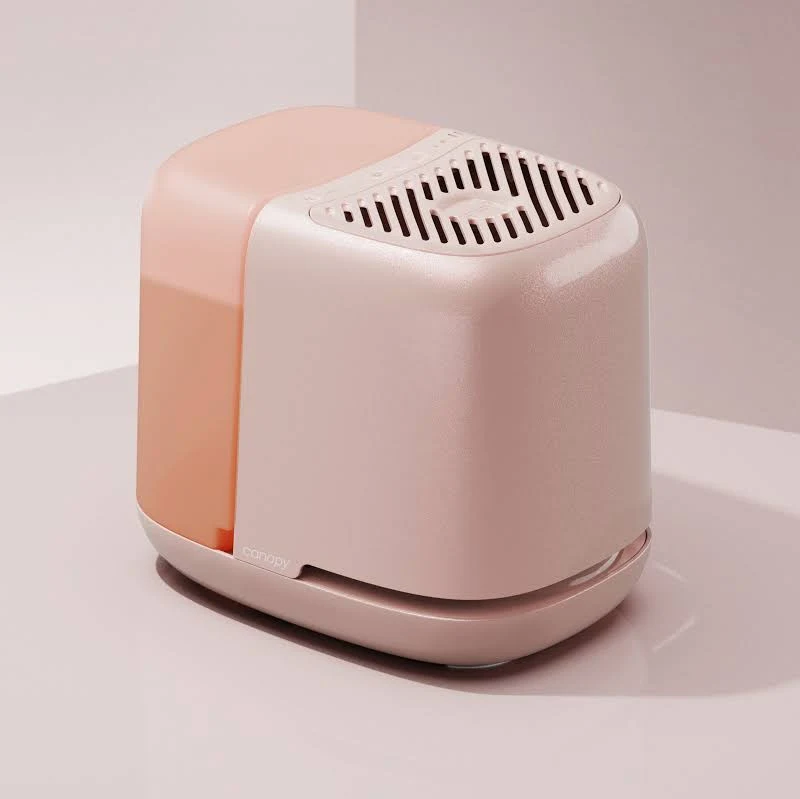
Forbes Vetted’s best baby humidifier overall. The tank has a wide mouth for easy filling and cleaning, and it’s dishwasher-safe, which is the best cleaning feature you can get. It’s a newer model, so it has fewer Amazon reviews than the older names on this list.
Check price on Amazon →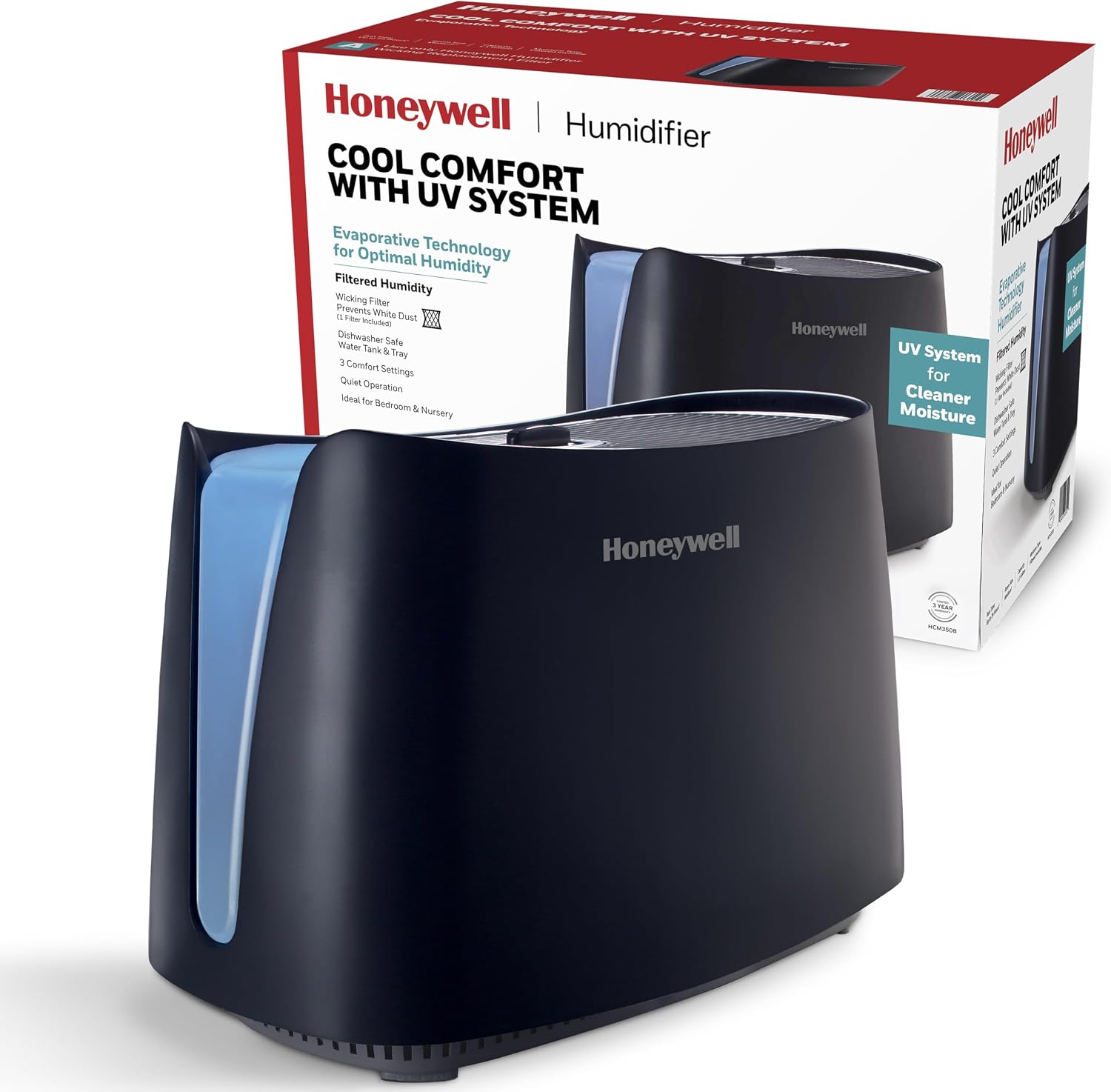
Forbes Vetted named it the easiest to clean. It’s a long-time nursery staple. As with any evaporative model, plan on replacing the filter.
Check price on Amazon →Forbes Vetted’s best value pick, in animal shapes that look at home in a nursery. It’s ultrasonic, so use distilled water if you want to avoid white dust.
Check price on Amazon →Forbes Vetted’s best large-room pick. It’s built for very large spaces, so it’s overkill for a typical nursery, but it’s a fit for a big room or an open floor plan, and you can check humidity from your phone.
Check price on Amazon →Always get a hygrometer too
Even humidifiers with built-in readings can be off. An independent hygrometer at crib height tells you what your baby is actually breathing.
Check price on Amazon →How to Use a Humidifier for Baby’s Room Safely
These steps follow KidsHealth’s guidance for using a humidifier with a child:
- Put it on a flat surface, out of your child’s reach, and away from walls.
- Use distilled water if your humidifier doesn’t have a filter.
- Turn it off when your child isn’t in the room.
- Check the hygrometer regularly so humidity stays in range.
Furniture or windows are damp or wet, white mineral dust is settling around the room, or you see black or brown spots on any part of the humidifier, which could be mold. And if your baby has asthma or allergies, check with your pediatrician before using one.
How to Clean a Baby Humidifier (and How Often)
This is the part that makes or breaks the whole idea. Standing water grows bacteria and mold, and a humidifier sprays whatever is in it into the air your baby breathes. Always follow your model’s own instructions, but this is the usual rhythm:
| When | What to do |
|---|---|
| Every day | Empty the tank, rinse it, wipe it dry, and refill with fresh water |
| Every week or so | Do a deeper clean of the tank and base using the method in your manual (many recommend white vinegar), then rinse well |
| On a schedule | Replace the filter or wick if your model has one |
| Before storing | Clean and dry every part completely so nothing grows over the off-season |
This is why we lean toward models with wide, accessible tanks. A humidifier that takes five minutes to clean gets cleaned. One that takes twenty gets left alone.
Humidifier and Air Purifier: Do You Need Both?
They do different jobs. A humidifier adds moisture, and a purifier filters particles from the air. If your nursery is dry, a humidifier helps with dryness, and a purifier handles dust and allergens. If humidity is already at 50% or above, skip the humidifier, since higher humidity feeds dust mites and mold. Our guide to the quietest air purifiers for a baby’s room covers the other half of the equation, including how to choose one that won’t keep your baby awake.
The Bottom Line
Don’t buy a humidifier for baby’s room because it’s on a registry list. Buy a hygrometer first, and see what your baby’s room really looks like. If it’s dry, pick a cool-mist model with a tank you can actually get your hand into, keep it clean, and watch the humidity so it stays in the middle range. If it’s already in range, you just saved yourself a purchase and a chore.
This article is general information, not medical advice. If your baby has trouble breathing, a fever, or trouble feeding, call your pediatrician. A humidifier is not a treatment.
Humidifier for Baby’s Room FAQ
Do I need a humidifier for baby’s room?
Usually not. Consumer Reports notes it’s typically not necessary for a baby’s health. It can help if your home is truly dry, so measure humidity with a hygrometer first.
What humidity should a baby’s room be?
Most sources recommend roughly 30 to 50%, with some allowing up to 60%. Aiming for around 40 to 50% keeps you away from both dry air and mold-friendly damp air.
Cool mist or warm mist for a baby?
Cool mist. Warm-mist humidifiers heat water and can cause burns, and cool mist is what KidsHealth and Consumer Reports recommend for children.
How often should I clean a baby humidifier?
Empty, rinse, and dry the tank daily, and do a deeper clean weekly or as your manual says. Replace filters on schedule.
Can I run a humidifier all night in the nursery?
Many parents do, but keep an eye on your hygrometer so humidity doesn’t climb above range, and stop if surfaces get damp. KidsHealth advises turning the unit off when your child isn’t in the room. Ask your pediatrician if you’re unsure.
Can I use a humidifier and an air purifier together?
Yes, they do different jobs. Just keep humidity in range, and place each unit with clear space around it.
Where should I put the humidifier in the nursery?
On a flat, stable surface out of your baby’s reach, away from walls, and not right next to the crib. Keep the cord out of reach too.
Our Humidifier for Baby’s Room Toolkit
- TempPro TP50 Thermometer/Hygrometer — check humidity and temperature first
- Canopy Nursery Humidifier 2.0 — best overall, with a dishwasher-safe tank
- Honeywell HCM-350 — the easiest to clean
- Crane Adorables — the best value pick
Sources: Consumer Reports · KidsHealth, How to Use a Humidifier · Forbes Vetted · Healthline