
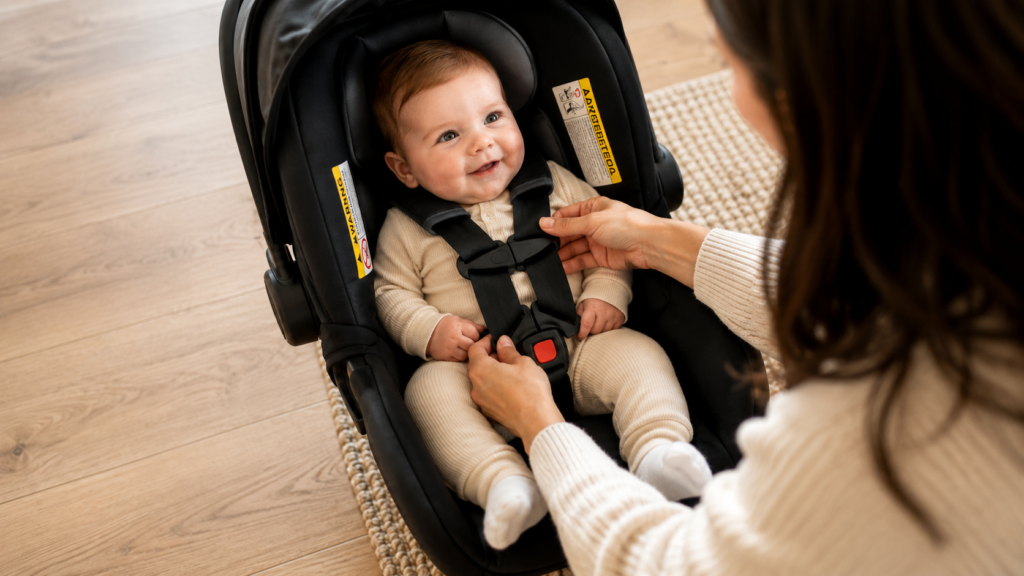
You were having a perfectly normal morning when it hit you — your baby looks a little… squeezed in that car seat. If you’ve been wondering if your little one is about to hit the infant car seat weight limit, you aren’t alone. So you grabbed the manual (or Googled it at 11pm), and now you’re staring down a weight limit you’re about to hit. Or maybe you already hit it.
First: take a breath. This is one of the most common “gear panic” moments in early parenthood, and it’s very fixable. Here’s exactly what to do.
Step 1: Check the Infant Car Seat Weight Limit vs. Height Limit
Most parents fixate strictly on the infant car seat weight limit — typically 22 to 35 lbs depending on the seat — but the limit that actually triggers an early switch in many babies, especially tall ones, is the height limit.
| 3 Signs Your Baby Has Outgrown the Infant Seat | ||
|---|---|---|
| 📏 | Head near the top | Less than 1 inch between the top of their head and the shell — the #1 sign, and the most commonly missed |
| ⚖️ | At the weight limit | Check your specific model’s manual — limits vary from 22 to 35 lbs across brands |
| 🦵 | Legs compressed | Dramatically bent or folded legs aren’t a safety issue, but often signal you’re close to the height limit |
💡 The 1-Inch Rule: Flip your infant seat’s manual to the “when to move on” section. Almost every major brand (Chicco, Graco, Britax) uses the same standard: when the top of your baby’s head is less than 1 inch below the top of the car seat shell, it’s time. No exceptions — this is a safety threshold, not a guideline.
Step 2: Understand Your Options
Once your baby outgrows the infant seat, you’ll move to a convertible car seat — a seat that grows with your child from rear-facing infant all the way through forward-facing toddler years. Many last until age 4 or beyond.
| Type | Best For | Rear-Face Limit | Price Range |
|---|---|---|---|
| Extended Rear-Facing — Safety Pick | Safety-focused families who want maximum rear-facing time | Up to 50 lbs | $200–$350 |
| Space-Saver Convertible — Small Car Pick | Compact cars, tight back seats, multi-car households | Up to 40–45 lbs | $150–$280 |
| Budget Convertible — Value Pick | Families who want solid safety on a tighter budget | Up to 40 lbs | $80–$150 |
Our Top Convertible Car Seat Picks
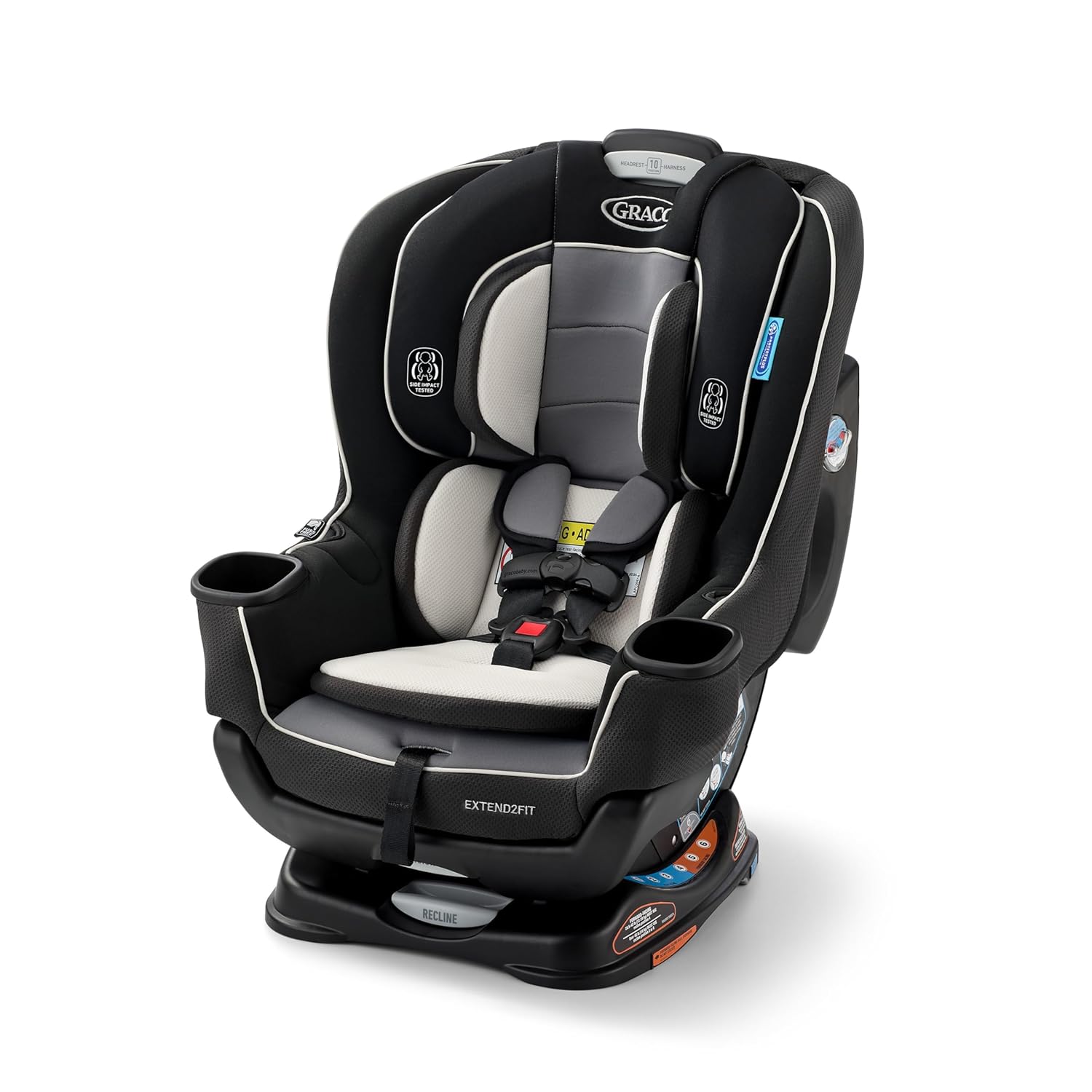
Graco Extend2Fit Convertible Car Seat
Rear-faces up to 50 lbs with an extending panel for leg room. Easy LATCH install, solid safety ratings, widely available.
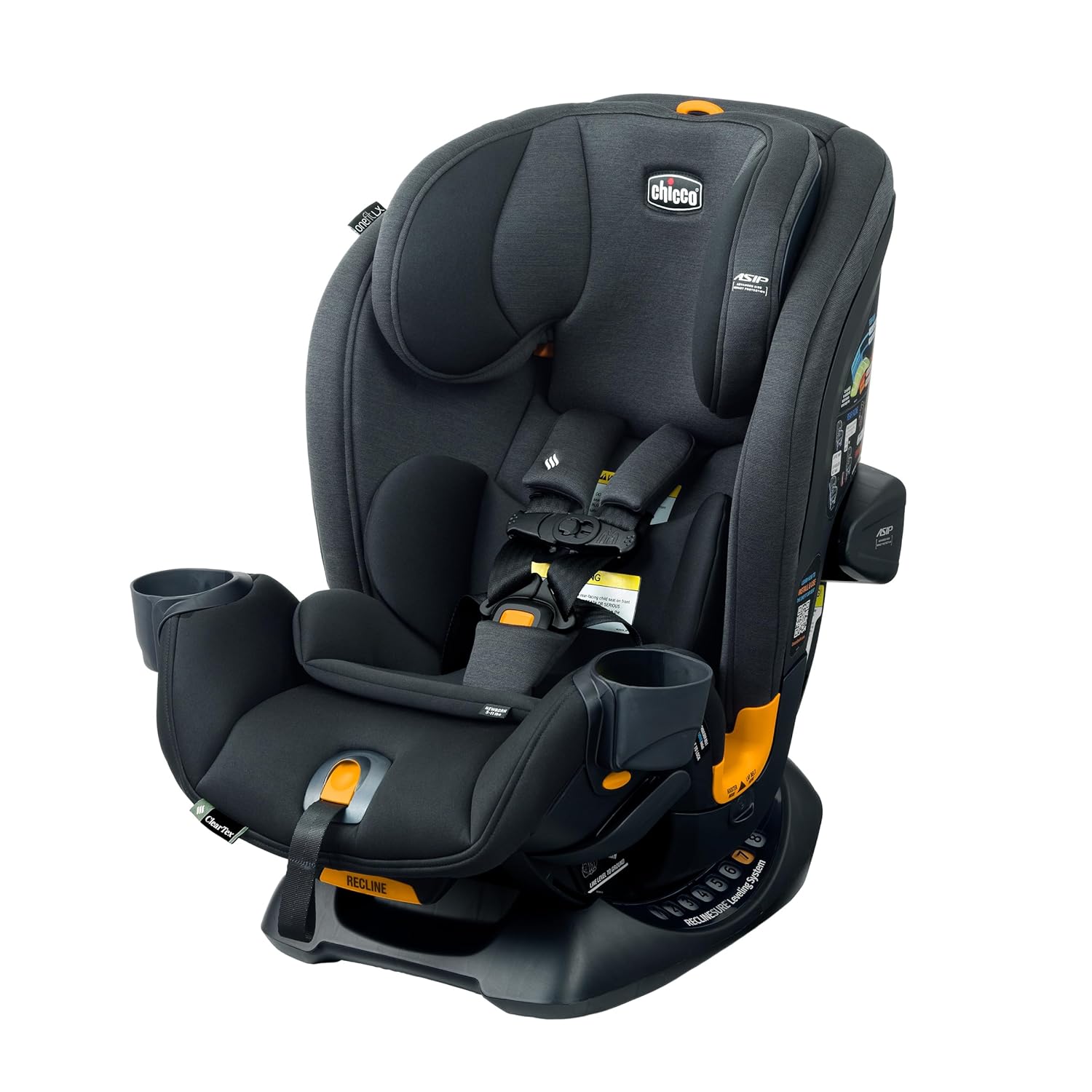
Chicco NextFit Sport Convertible Car Seat
One of the slimmest convertibles on the market. SuperCinch LATCH makes install foolproof. 9-position recline fits steep vehicle angles.
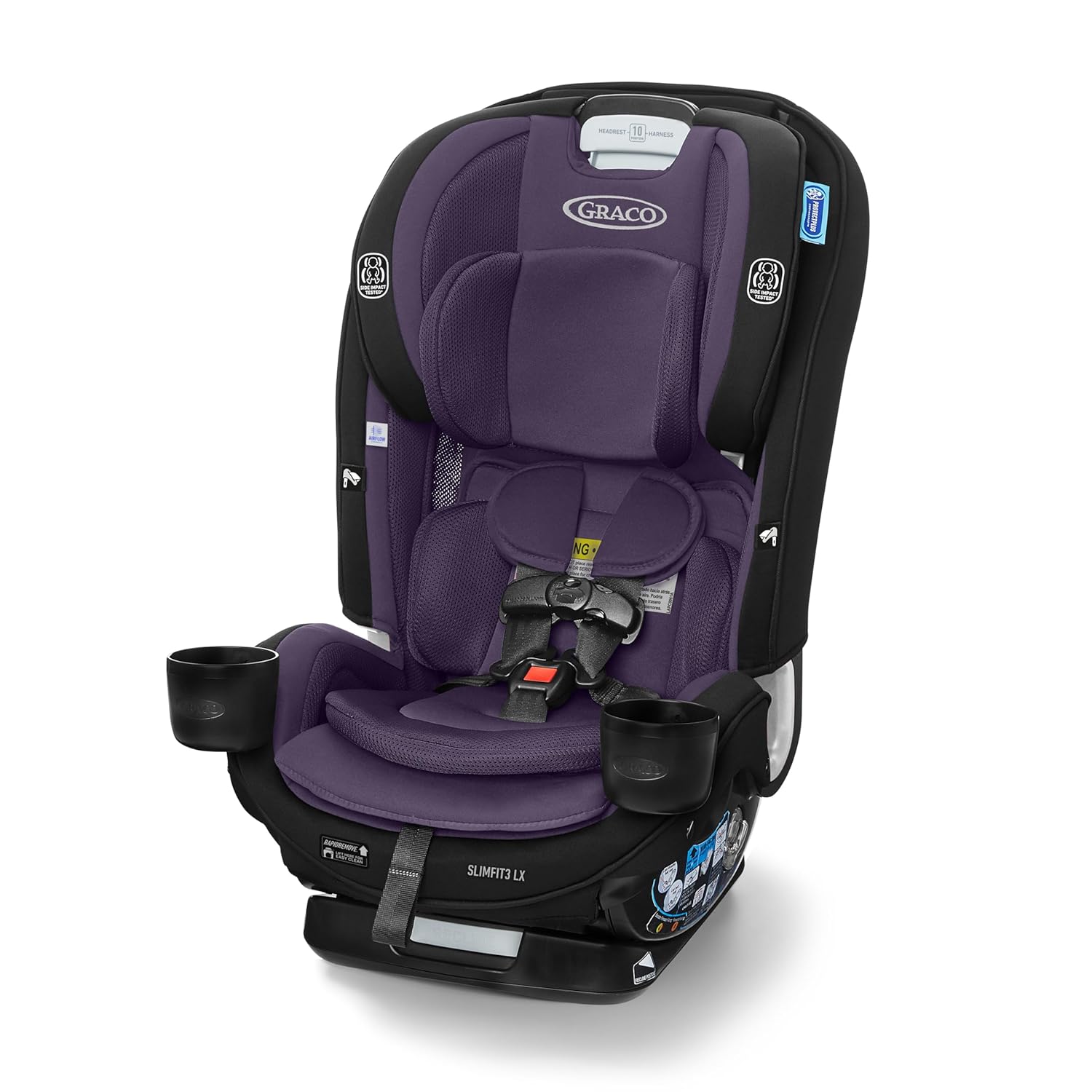
Graco SlimFit3 LX 3-in-1 Car Seat
Grows from rear-facing infant through booster — you may never need another car seat. Slim design for smaller vehicles. Hard to beat under $200.
🛻 When Can Baby Ride in the Stroller Without the Car Seat?
Many parents ditch the infant car seat + stroller adapter combo at the same time — and honestly, it’s a relief. The general guidance: babies should be able to sit with minimal support and hold their head steadily upright before riding in the stroller seat position. This is usually around 5–6 months, though it varies by baby and by stroller model. Always check your stroller’s manual for its minimum weight or age requirement.
📎 Related: How to Fit 3 Car Seats Across → | Graco SlimFit vs Extend2Fit for Small Cars (2026) →
Frequently Asked Questions
What’s the average age babies outgrow their infant car seat?
Most babies outgrow the infant seat somewhere between 9 and 18 months, though tall babies can hit the height limit as early as 6–9 months. There’s no set age — it depends entirely on your baby’s growth and the specific seat you have.
Can I keep using the infant seat if my baby is under the weight limit?
Only if they also haven’t reached the height limit (the 1-inch rule). If their head is within 1 inch of the top of the shell, you need to transition regardless of weight. Safety always wins.
Should my baby still be rear-facing in the convertible seat?
Yes — the AAP recommends keeping babies rear-facing as long as possible, until they reach the maximum rear-facing weight or height limit of the convertible seat. Most convertibles allow rear-facing up to 40–50 lbs, so there’s no rush to turn them forward.
Does a convertible car seat fit in all vehicles?
Not always — especially rear-facing in compact cars. If you drive a smaller vehicle, prioritize a “space-saver” convertible like the Chicco NextFit or Clek Fllo. Measure your back seat depth before buying.
What do I do with my old infant car seat?
Don’t pass it along unless you know its full history — seats that have been in accidents should be retired. If it hasn’t expired (check the manufacture date; most expire 6–10 years out) and hasn’t been in a crash, you can donate it or save it for a future sibling.
The Bottom Line
Outgrowing the infant seat isn’t a gear failure — it’s just your baby doing their job (growing). Understanding your infant car seat weight limit is only half the battle; keeping the 1-inch rule in mind ensures your baby stays completely safe until they’re truly ready for a convertible seat. The key is checking both the weight and height limits, not just one. Once you know it’s time, a convertible seat is one of the most worthwhile gear purchases you’ll make. It can last years and genuinely grow with your child.
If you’re still unsure which convertible fits your car and lifestyle, our comparison guide breaks it down further. And if you’re simplifying your stroller setup at the same time, that guide is worth a read too.
You’ve got this.