Nanit Pro vs Owlet Dream Duo 3: Health Monitoring & Data Differences
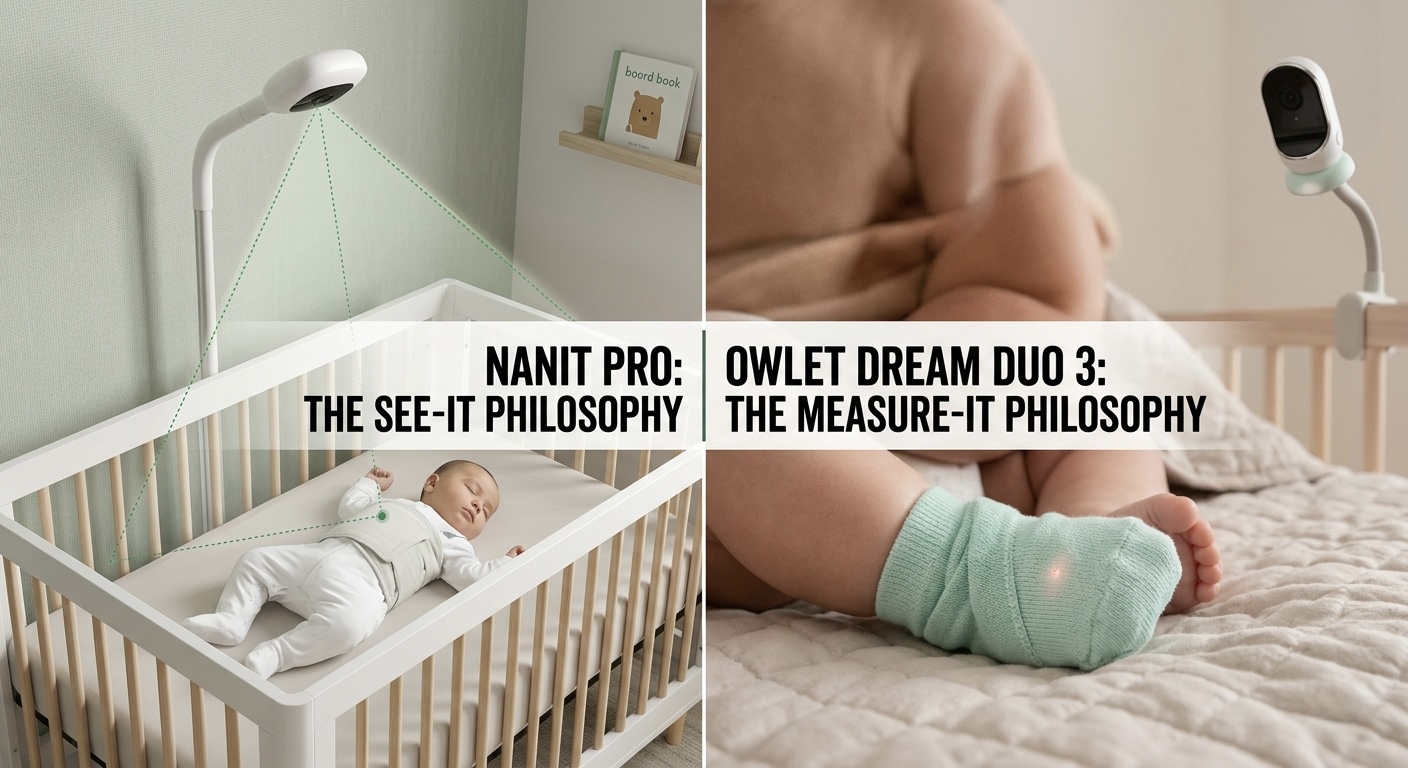
This is the biggest fork in the road. The Nanit Pro infers breathing from motion — it watches the rise and fall of your baby’s chest and alerts you if movement stops. It’s clever, non-invasive technology, but it’s motion data, not physiological data.
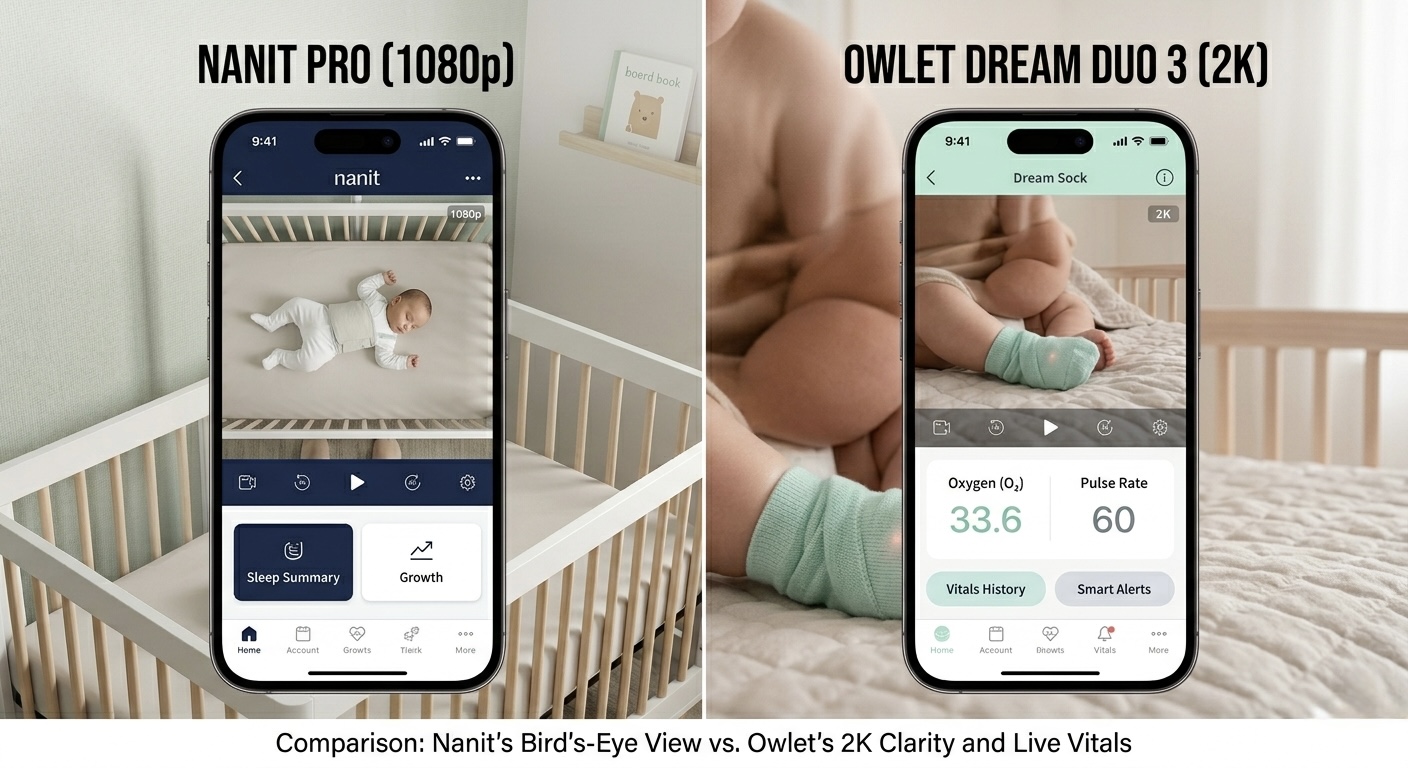
The Owlet Dream Sock measures pulse rate and blood oxygen directly via pulse oximetry — the same method used in NICUs and hospitals. That’s actual physiological data. If your baby’s oxygen drops to 80% at 3 AM, you’ll know in real time. Nanit simply can’t offer that, by design.
For parents with medically complex babies, preemies, or those who want a clinical-grade safety net, this difference is decisive. In the Nanit Pro vs Owlet Dream Duo 3 comparison, this is the single most important distinction: one delivers sleep intelligence, the other delivers clinical physiological data. For parents primarily seeking sleep data and video visibility, Nanit’s approach is fully sufficient — and no sock to keep track of is genuinely appealing. If you’re also concerned about data privacy and connected devices in the nursery, our guide to the best baby monitors without WiFi is worth a read before you decide.
Nanit Pro vs Owlet Dream Duo 3: Video Quality in 2026
Previous Owlet generations used a 1080p camera — same as Nanit. The Dream Duo 3 upgrades to 2K HD, which is now slightly better than Nanit’s camera. In practical nursery use the difference is subtle, but if video clarity is a priority, Owlet wins the round in 2026.
When looking at footage from both monitors, the gap is subtle in a dark nursery — Nanit’s camera advantage in this Nanit Pro vs Owlet Dream Duo 3 comparison is its bird’s-eye wall mount positioning, which gives a top-down whole-crib view that parents consistently rave about. Owlet’s camera placement is more flexible but doesn’t default to the same overhead angle.
Nanit Pro vs Owlet Dream Duo 3: Cost, Subscriptions & Long-Term Value
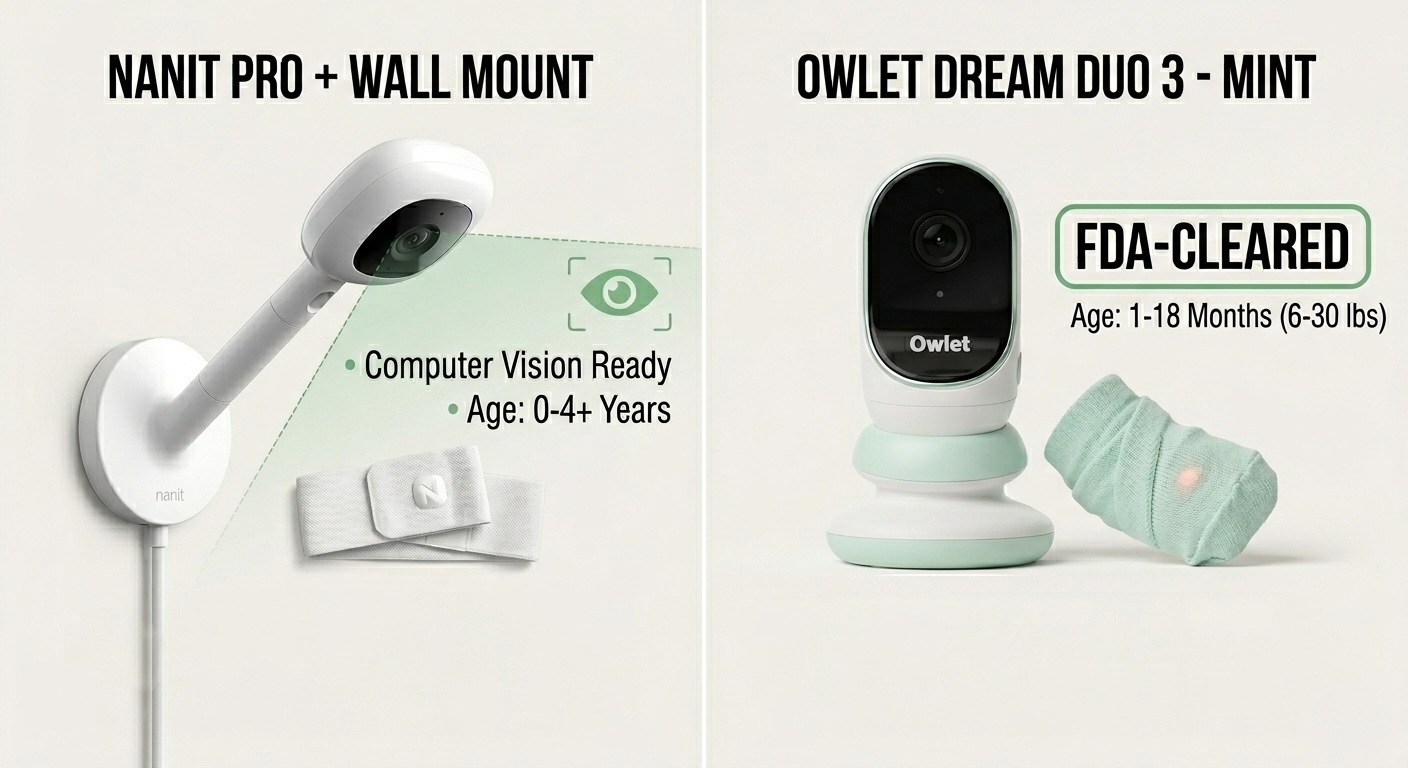
One of the most overlooked factors in the Nanit Pro vs Owlet Dream Duo 3 decision is long-term value. The Dream Sock is only usable from 1–18 months (6–30 lbs). After that, you’re essentially left with the camera. Nanit’s video platform grows with your child for years — the “Child Out of Bed” and standing notifications are useful well into toddlerhood. If you’re thinking multi-year ROI, Nanit has the edge.
Both products charge for enhanced cloud features: Nanit through the Insights Sleep Plan, Owlet through the Owlet360 upgrade for extended video storage. Neither is subscription-free at full feature capacity. Factor that into your budget math.
Nanit Pro or Owlet Dream Duo 3: Which Fits Your Parenting Style?
Choose Nanit Pro if
You’ll obsess over every fluctuating number. Nanit gives you excellent sleep data and visual security without the data-induced panic. No sock readings to misinterpret at 3 AM.
Choose Owlet Dream Duo 3 if
You’ll stare at the bassinet all night unless you have hard medical data proving your baby is breathing fine. The Dream Sock’s live readings are the only thing that will actually let you sleep.